


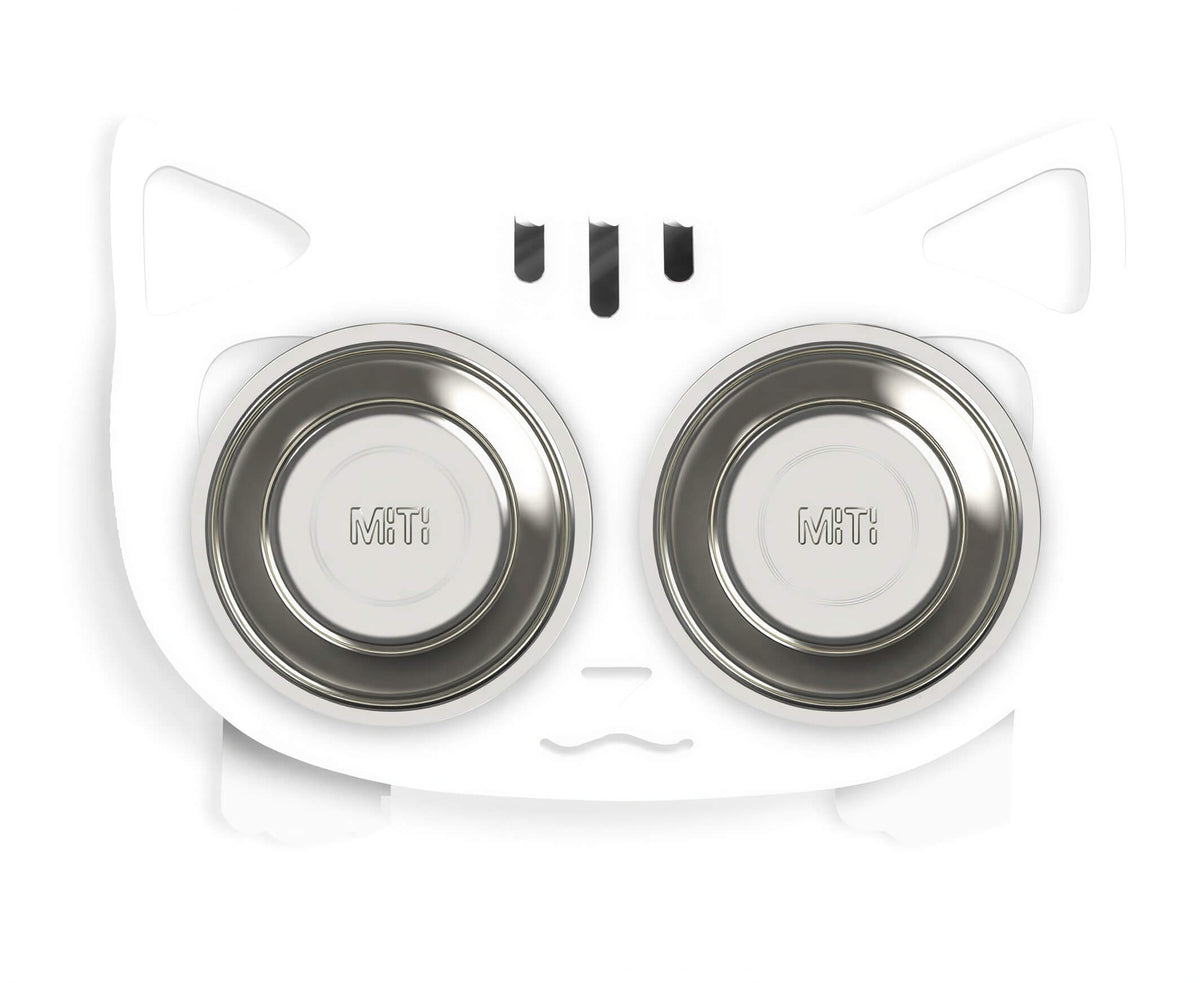
If this sounds familiar
She eats the middle and leaves a ring round the edge, and you can never tell whether she's full or just given up.
She's getting older and you've noticed her stop, reposition, and start again halfway through a meal.
He's a flat-faced breed and every bowl you've tried seems to be the wrong shape for his face.
Why you'll love it
The last mouthful is the one most pets leave. Usually it's not fussiness — it's geometry.
Tilted towards her
The food slides to the near edge instead of spreading across a flat base, so the last of it is as easy to reach as the first.
Easier on the neck
She doesn't have to drop her head and push her face into a well. That matters most for older pets and anyone with a stiff neck.
Stainless, not plastic
Non-porous, dishwasher safe and nothing for bacteria to sit in. Scratched plastic against the chin is a common cause of feline chin acne.
Four colours
Blue, white, pink or black. Something you'd leave out in a kitchen rather than hide behind a cupboard door.
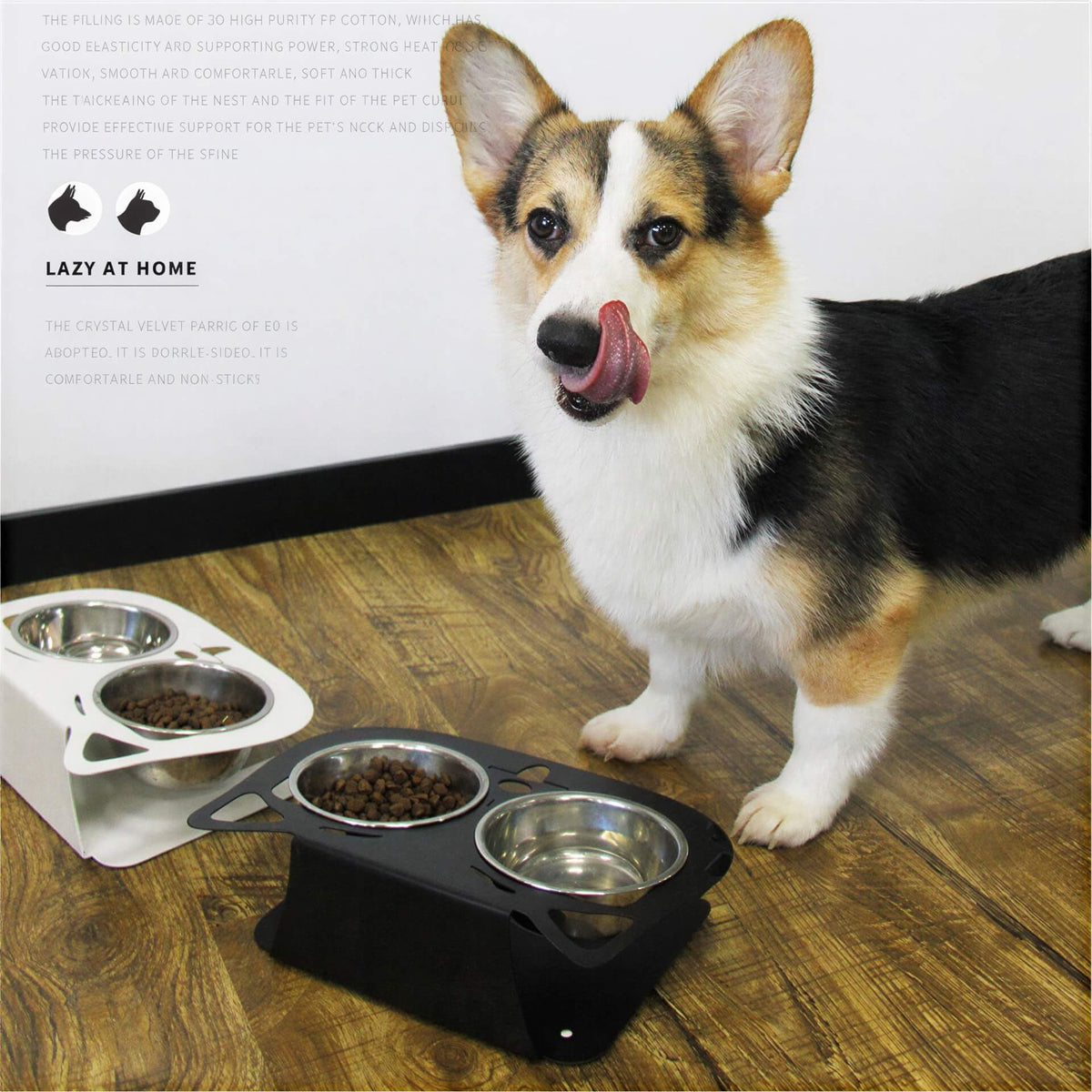
Watch her eat from a deep bowl. The whole head goes in.
A flat-bottomed bowl holds the last of the food in a ring at the bottom, which means the only way to get at it is to drop the head and push the face down into the dish. Whiskers touch the sides, the neck bends further than it wants to, and most pets decide the last few mouthfuls aren't worth the bother. Tip the whole bowl towards them and the food comes to the near edge instead.
How it works
Why the angle matters more than the bowl
Simple to use
Wash it, angle it towards her, keep it clean.
Wash it before the first meal
Through the dishwasher or by hand. New stainless often carries a light manufacturing film, and a cat who gets one odd-smelling meal from a new bowl will be suspicious of it for a fortnight.
Low edge facing her
The angle only works if it's pointing the right way. Put it in the same spot as the old bowl - pets notice a change of location far more than a change of dish - and away from the litter tray.
Wash it daily with wet food
The tilt means everything collects in one corner, which is tidier to eat from and quicker to go off. Rinse after every wet meal, full wash daily.
Great for
- Older cats and dogs with stiff necks
- Flat-faced breeds - Persians, Himalayans, pugs, bulldogs
- Pets who eat the middle and leave a ring round the edge
- Anyone replacing scratched plastic bowls
- Wet feeders, where the angle gathers everything into one corner
- Cats and small dogs
Not ideal for
- Medium and large dogs. This is sized for cats and small breeds.
- Fast eaters who need slowing down - that's a ridged slow feeder, not this.
- Households wanting food and water in one unit. This is a single bowl.
- Deep-chested large breeds, where raised and angled feeding has been linked to higher bloat risk - ask your vet first.
- Pets who have genuinely gone off their food, who need a vet rather than a new bowl.
Not sure? Send us your pet's measurements and we'll tell you.
Bowls, necks and the last mouthful
Why the last mouthful gets left
In a flat-bottomed bowl the remaining food spreads into a thin ring at the bottom and sides - the hardest place in the dish to reach. Owners read the leftovers as a cat being fussy or off her food. Quite often she simply couldn't get at it comfortably.
Older pets and necks
Arthritis in the neck and shoulders is common in cats over ten and often goes unnoticed, because cats hide it well. One of the few visible signs is a change in how they eat: pausing mid-meal, repositioning, or giving up early. A dish that brings the food up to them removes part of that.
Flat faces and deep bowls
Persians, Himalayans, pugs and bulldogs have the muzzle to reach into a deep dish and not much else. They end up eating with the whole face pressed into the bowl, which is messy and uncomfortable. An angled rim gives them something they can actually get their mouth around.
A caution for big dogs
Raised and angled feeding has been associated with increased risk of bloat in large deep-chested breeds in at least one major study. This bowl is sized for cats and small dogs so it shouldn't come up, but if you have a Great Dane or a German Shepherd, talk to your vet before changing anything about how they're fed.
Product details
What's included
1 x tilted pet bowl in your chosen colour
Care & maintenance
Stainless steel, so it goes in the dishwasher on any cycle. Dry it afterwards to stop water spots forming in the low corner where moisture collects. Wash daily if you're feeding wet food — the angle means the residue all gathers in one spot.
Shipping
Free on every US order. Most arrive within 7-12 days. Tracking by email as soon as it ships.
Returns
Damaged, faulty or wrong item - tell us within 7 days and we'll replace or refund in full. We can't take change-of-mind returns, which is why every page says who it isn't for.
Ask before you buy
Send your pet's measurements, breed and age and we'll tell you honestly whether this suits - including when it doesn't.
Questions
Before you order
What's the difference between Style 1 and Style 2?
[CONFIRM WITH SUPPLIER - do not publish until this is answered]
How is this different from your other bowls?
The Double Cat Bowl holds food and water side by side in a wide shallow dish, best for a cat who eats at a normal pace. The slow feeder has ridges to slow a gulper down. This one is a single tilted bowl for pets who struggle to reach the last of the food or find bending uncomfortable.
Will it tip over?
It's weighted to sit at its angle on a flat surface. A determined dog braced against it will move anything, but for a cat eating normally it stays put.
Is it big enough for a dog?
For a small dog or puppy, yes. A medium or large breed will empty it in one go and push it around.
Can I put it in the dishwasher?
Yes, any cycle. Dry it afterwards - water sits in the low corner and leaves spots on the finish.
My cat has spots on her chin. Would this help?
Possibly. Feline chin acne is often linked to bacteria in scratched plastic bowls pressing against the chin at every meal. Switching to stainless and washing daily clears a lot of mild cases. If it's sore, swollen or spreading, see your vet.
Is it suitable for a senior cat with arthritis?
It's one of the better bowl shapes for that, because she doesn't have to drop her head as far. If she's showing other signs of stiffness it's worth a vet conversation too - neck and shoulder arthritis in older cats is common and very treatable.