


If this sounds familiar
Her bowl is empty in ninety seconds and she's looking at you like she hasn't been fed.
Ten minutes after dinner there's a pile of undigested food on the carpet and you've started wondering if she's ill.
You've got two pets, one gulps and one grazes, and you've been buying two different bowls.
Why you'll love it
Food that reappears on the carpet ten minutes after dinner is usually a speed problem, not a stomach one.
Turns ninety seconds into ten minutes
Ridges break the food into pockets so there's no big mouthful to take. The air goes down slower too, which is the part that causes the trouble.
Switches back when you don't need it
Slow mode for meals, normal mode for everything else. Useful in a two-pet house where only one of them gulps.
Stainless, not plastic
Non-porous, dishwasher safe, and nothing for bacteria to sit in. Scratched plastic bowls against the chin are a common cause of feline chin acne.
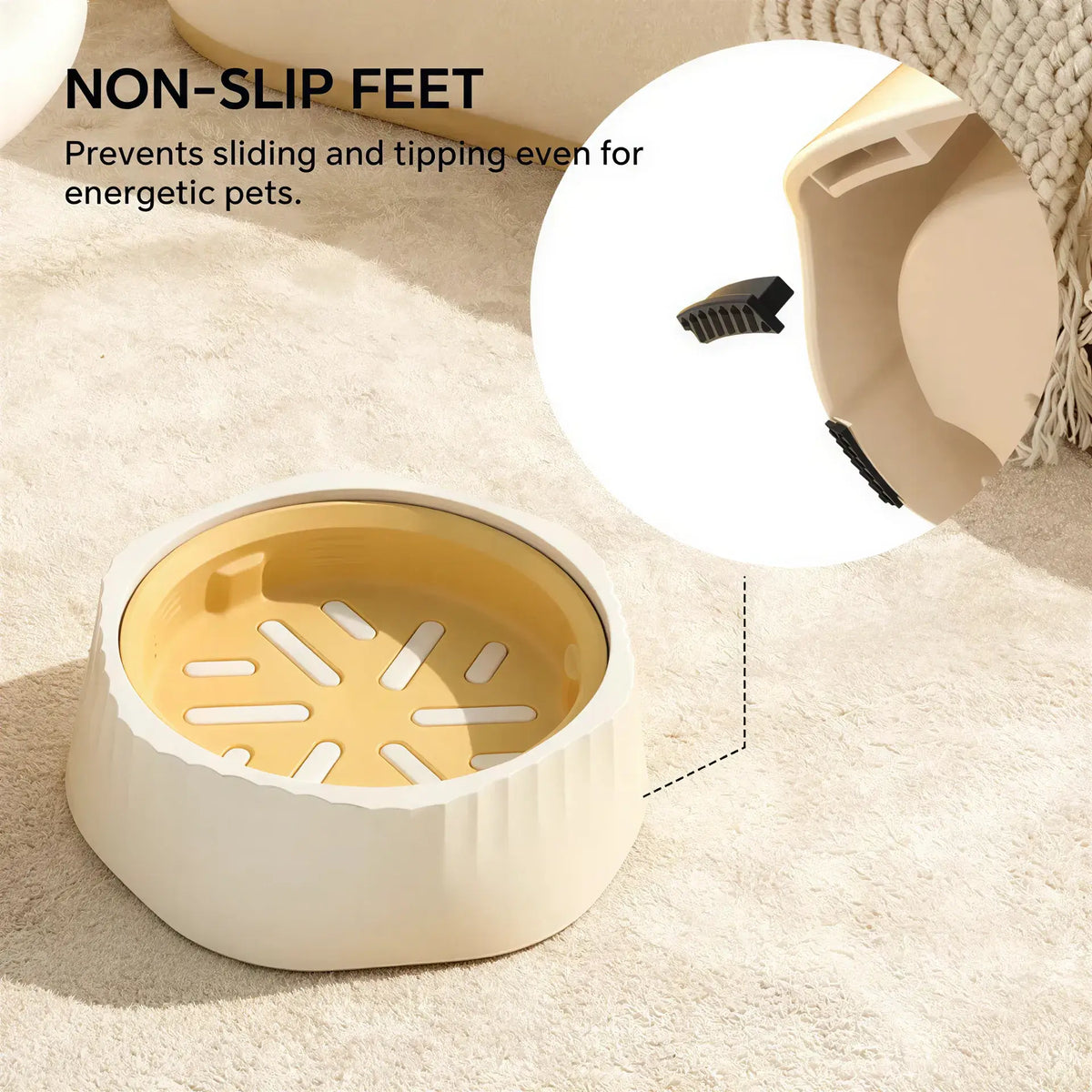
Stays where you put it
A non-slip base, which matters more on a slow feeder - a pet working at the ridges pushes harder than one eating from an open dish.
What eating too fast actually does
A pet that inhales a meal swallows a lot of air with it. The stomach fills faster than it can cope with, stretches, and pushes the lot back up — usually within ten or fifteen minutes, usually still in recognisable pieces. Owners see undigested food on the floor and assume something's wrong. Nine times out of ten the only thing wrong is the speed.
How it works
What eating too fast actually does
Simple to use
Start it on fast, then switch.
Start it on fast mode
Give her two or three meals in the normal setting so the bowl itself stops being new. Changing the bowl and the difficulty on the same day is how a pet decides the whole thing isn't worth it.
Then switch to slow
Same spot, same time, same food. Stay in the room for the first couple of meals. Some pets paw at the ridges in frustration before they work out the technique - that's normal and it passes within a few days.
Time one meal
You're aiming for five minutes or more. If she's still clearing it in under two, split the portion across two sittings rather than looking for a harder bowl.
Great for
- Cats who bring undigested food back up shortly after eating
- Puppies and small dogs who inhale a bowl in under a minute
- Two-pet homes where only one of them gulps
- Pets being moved onto a slow feeder gradually
- Anyone replacing scratched plastic bowls
- Overweight pets, where slowing the meal helps them register that they're full
Not ideal for
- Medium and large dogs. This is sized for cats and small breeds.
- Deep-chested large breeds at risk of bloat - they need a slow feeder built for their size, not this one.
- Flat-faced cats and dogs, who struggle to reach into ridges at all. Ask us before ordering.
- Pets who already eat at a normal pace. You'd be adding whisker contact for no benefit.
- Pets vomiting repeatedly, who need a vet rather than a bowl.
Not sure? Send us your pet's measurements and we'll tell you.
Slow feeders, bloat and the trade-off nobody mentions
Regurgitation versus vomiting
Worth being able to tell apart. Regurgitation is passive and fast - no retching, no warning, food still recognisable, usually within fifteen minutes of eating. Vomiting involves obvious heaving and the food is partly digested. The first is often just speed. The second is a reason to call your vet.
Bloat, and who's actually at risk
In deep-chested large dogs - Great Danes, German Shepherds, Weimaraners - rapid eating is a recognised risk factor for gastric dilatation-volvulus, which is a genuine emergency. Slowing meals is standard advice for those breeds. This particular bowl is not big enough for them, so if that's your dog you need a large-breed slow feeder, not this.
The whisker trade-off
Any slow feeder makes the eating space narrower and deeper, which brings whiskers against the sides. Whiskers are packed with nerve endings and cats dislike that contact - it's why some pull food onto the floor. For a genuine gulper the trade is worth making. For a normal eater it isn't, which is the reason the fast setting exists.
When the bowl isn't the answer
If she's still bringing food up after a fortnight on slow mode, or losing weight, or the vomiting is happening well after meals rather than right after, stop experimenting with bowls and see your vet. A slow feeder fixes a speed problem and nothing else.
Product details
What's included
1 x dual-mode slow feeder bowl
Care & maintenance
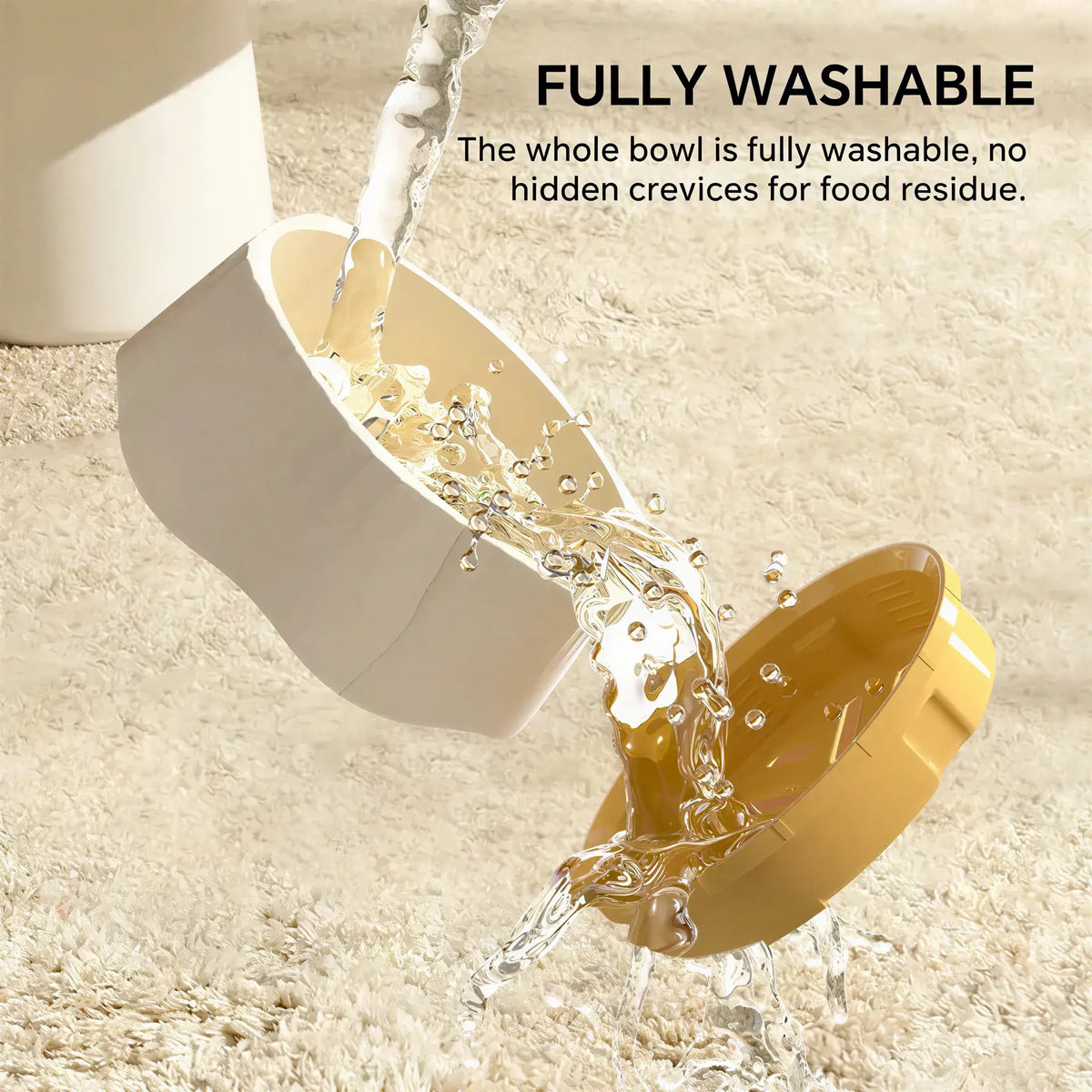
The stainless bowls lift out and are dishwasher safe. Wipe the base by hand rather than running it through the machine. Pay attention to the ridges when you wash it — food packs into the corners, and a slow feeder that doesn't get cleaned properly is worse than no slow feeder at all.
Shipping
Free on every US order. Most arrive within 7-12 days. Tracking by email as soon as it ships.
Returns
Damaged, faulty or wrong item - tell us within 7 days and we'll replace or refund in full. We can't take change-of-mind returns, which is why every page says who it isn't for.
Ask before you buy
Send your pet's measurements, breed and age and we'll tell you honestly whether this suits - including when it doesn't.
Questions
Before you order
How much does it actually slow her down?
Most pets go from clearing a bowl in under two minutes to taking five or more. Time one meal after a week - if she's still finishing in ninety seconds, split the portion into two sittings rather than hunting for a harder bowl.
What's the difference between this and your Double Cat Bowl?
That one is wide and shallow, built so whiskers never touch the sides - right for a cat who eats at a normal pace. This one has ridges that slow a gulper down, and accepts some whisker contact as the cost of doing it. Buy on which problem you actually have.
My cat just gave up and walked away.
Common in the first few days. Put it back on fast mode for two or three meals so the bowl stops being the new thing, then switch again and stay in the room. Almost all pets work out the technique inside a week.
Will it stop my dog bloating?
Slowing meals is standard advice for deep-chested large breeds at risk of bloat, but this bowl is sized for cats and small dogs and isn't big enough for them. If you have a Great Dane or a German Shepherd you need a large-breed slow feeder.
Can I put it in the dishwasher?
The stainless bowls, yes. Wipe the base by hand. Get right into the ridges when you wash it - food packs into the corners and a dirty slow feeder is worse than none.
Is it suitable for a flat-faced breed?
Usually not. Persians, Himalayans, pugs and bulldogs can't get into ridged bowls properly and end up frustrated or underfed. Message us with the breed before you order and we'll tell you honestly.
She's still being sick after a fortnight. What now?
Then it isn't speed, and a bowl won't fix it. See your vet - particularly if it's happening well after meals, if she's losing weight, or if she's off her food.