


If this sounds familiar
He's had a walk and he still can't settle - pacing the kitchen, standing up, lying down, standing up again.
You leave the house and he starts within two minutes. The neighbour has mentioned it.
He's destroyed three soft toys this month and you'd rather he put that into something built for it.
Why you'll love it
An empty chew toy holds a dog for three minutes. A stuffed and frozen one holds him for thirty.
Thirty minutes, not three
Empty, it holds a dog briefly. Stuffed and frozen overnight, it keeps him working at it for half an hour - and that's the difference between a toy and a tool.
Chewing settles a dog
Sustained chewing lowers arousal. It's what trainers reach for when a dog won't settle, when guests arrive, or in the first minutes after you leave.
Ridged for the teeth
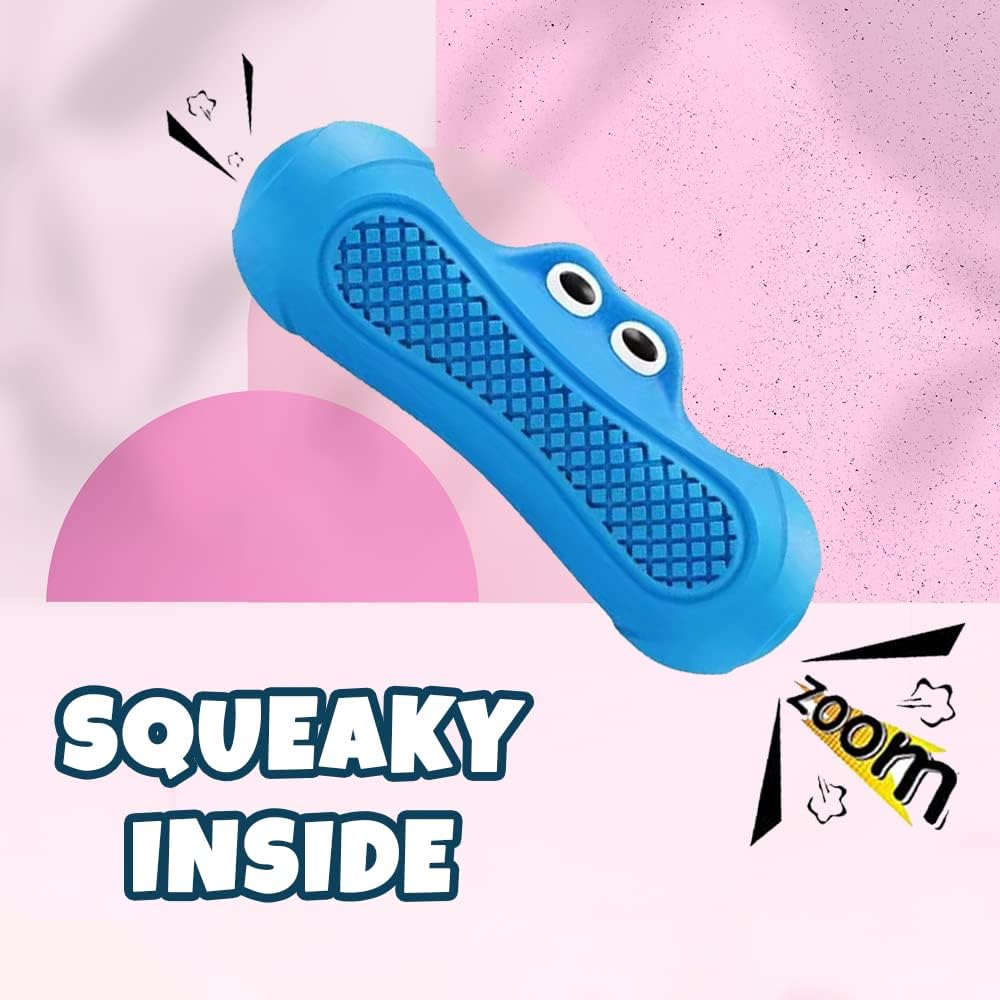
The raised nubs work the gums and lift soft plaque while he chews. Helpful alongside brushing - not instead of it.
Dishwasher safe
Natural rubber, top rack. Nothing porous, nothing to hold old food in the cavity.
Chewing is how a dog calms himself down.
It isn't just something to do. Sustained chewing releases endorphins and lowers arousal — it's one of the few things a dog can do to bring himself down from pacing or whining. That's why trainers reach for a stuffed chew toy when a dog won't settle, when guests arrive, or in the first minutes after you leave the house.
How it works
Why a stuffed toy works and an empty one doesn't
Simple to use
Stuff it, freeze it, hand it over.
Stuff it loosely the first few times
Wet food, soaked kibble or a smear of dog-safe peanut butter, packed in gently so it comes out easily. Make the first four or five sessions easy wins. A dog who can't get anything out of it on day one writes it off.
Give it before he needs it
Hand it over when you want calm - as a visitor arrives, as you settle down for the evening, five minutes before you leave the house. Giving it to a dog who is already barking rewards the barking.
Make a batch and freeze them
Stuff several at once and keep them in the freezer. A frozen one lasts two to three times as long as a fresh one, and there's always one ready when you need it.
Great for
- Dogs who can't settle in the evening
- Crate training and teaching a dog to be left
- Puppies past the teething stage
- Dogs who destroy soft toys and need somewhere to put it
- Keeping a dog occupied when visitors arrive
- Slowing a meal down - stuff it with his dinner instead of using a bowl
Not ideal for
- Unsupervised chewing. Natural rubber lasts well, but any toy can be destroyed and swallowed pieces mean a vet.
- Dogs with a history of swallowing things whole.
- Teething puppies under four months, whose jaws aren't ready for firm rubber.
- Dogs with dental disease or recent extractions - ask your vet first.
- Anything stuffed with xylitol peanut butter, chocolate, grapes, raisins or onion. Check every label.
Not sure? Send us your pet's measurements and we'll tell you.
Stuffing, freezing, and the peanut butter problem
Check your peanut butter for xylitol
Xylitol, sometimes labelled birch sugar, is used to sweeten sugar-free peanut butter and is severely toxic to dogs in small amounts - it causes a dangerous drop in blood sugar within an hour, and liver damage at higher doses. Read the label of every new jar, not just the first one. Brands reformulate.
And never human toothpaste
The supplier listing suggests toothpaste as a filling. Human toothpaste contains fluoride and frequently xylitol, and dogs swallow rather than spit. If you want to use the toy for dental work, it has to be enzymatic toothpaste made for dogs.
Why freezing changes everything
Frozen filling has to be worked out gradually instead of licked away, which turns a five-minute toy into a thirty-minute one. Stuff a few at a time and keep them in the freezer, and you always have one ready for the moment you actually need it.
What it does for teeth, honestly
The ridges rub the gums and lift soft plaque while he chews, which is genuinely useful. They will not remove tartar - that's mineralised and only comes off with a scale at the vet - and this is not a replacement for brushing. Anyone selling a rubber toy as a dental treatment is overselling it.
Product details
What's included
1 x rubber chew toy
Care & maintenance
Dishwasher safe on the top rack, or wash by hand with a bottle brush to get into the cavity. Dry it fully before stuffing it again. Check it over every few weeks and bin it the moment the rubber splits or a piece goes missing.
Shipping
Free on every US order. Most arrive within 7-12 days. Tracking by email as soon as it ships.
Returns
Damaged, faulty or wrong item - tell us within 7 days and we'll replace or refund in full. We can't take change-of-mind returns, which is why every page says who it isn't for.
Ask before you buy
Send your pet's measurements, breed and age and we'll tell you honestly whether this suits - including when it doesn't.
Questions
Before you order
Can I fill it with peanut butter?
Only after you have read the jar. Xylitol - sometimes written as birch sugar - is used in sugar-free peanut butters and is severely toxic to dogs in small amounts. Plain peanut butter with no sweetener is fine. Check every new jar, because brands change their recipes.
What else can I put in it?
Wet food, soaked kibble, plain natural yoghurt, mashed banana, or his ordinary dinner. Take whatever you use out of his daily food rather than adding to it.
Should I really freeze it?
It's the single thing that makes the most difference. Frozen filling has to be worked out slowly rather than licked off, which turns five minutes into thirty. Stuff several at a time and keep them in the freezer.
Will it survive a heavy chewer?
Natural rubber holds up well to normal chewing. No toy survives a dog determined to destroy it, so check it over every few weeks and bin it when the rubber splits or a piece is missing.
Is it the right size for my dog?
[CONFIRM DIMENSIONS WITH SUPPLIER - do not publish until answered]
Can I leave him alone with it?
Supervised is safer, particularly the first few times while you see how he handles it. If he works at the filling rather than trying to destroy the toy, most owners are comfortable leaving him with it - but check it over each time before you hand it back.
Will it help with separation anxiety?
It helps, and it isn't a cure. A stuffed toy covers the first twenty minutes after you leave, which is when most dogs are at their worst, and it builds a positive association with you going out. Genuine separation anxiety needs a proper behaviour plan alongside it.