


If this sounds familiar
He's had a walk, he's been fed, and he's still pacing the kitchen at nine in the evening.
The toys he'll touch are the ones you're holding. The rest sit in a basket untouched.
He gets mouthy when he's excited, and you'd rather he had something to put his teeth into that isn't your sleeve.
Why you'll love it
The best game you can play with a dog needs two of you. This is the handle.
A game that needs both of you
Fetch is your dog working alone. Tug is the two of you reading each other, which is why it settles a restless dog far faster than solo play.
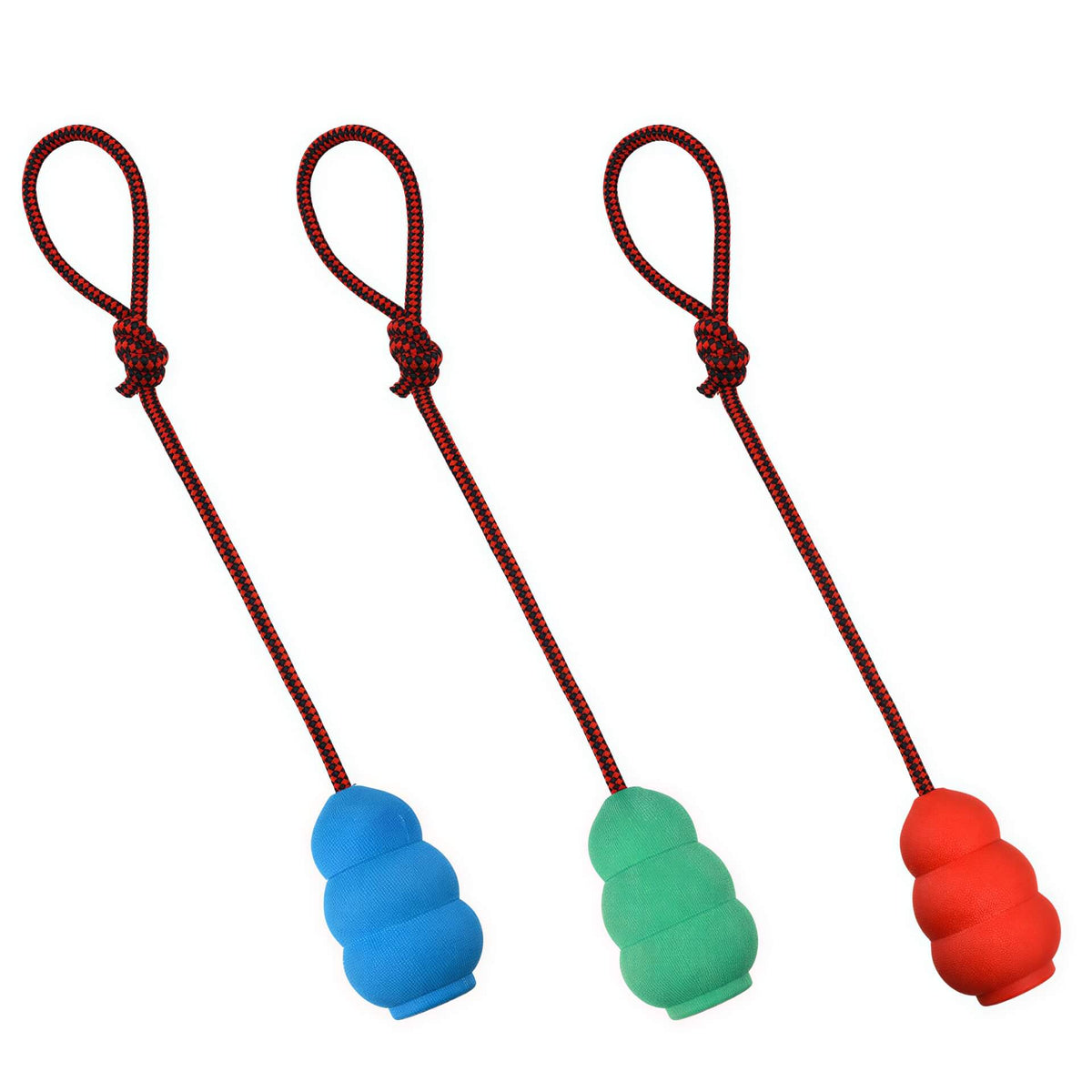
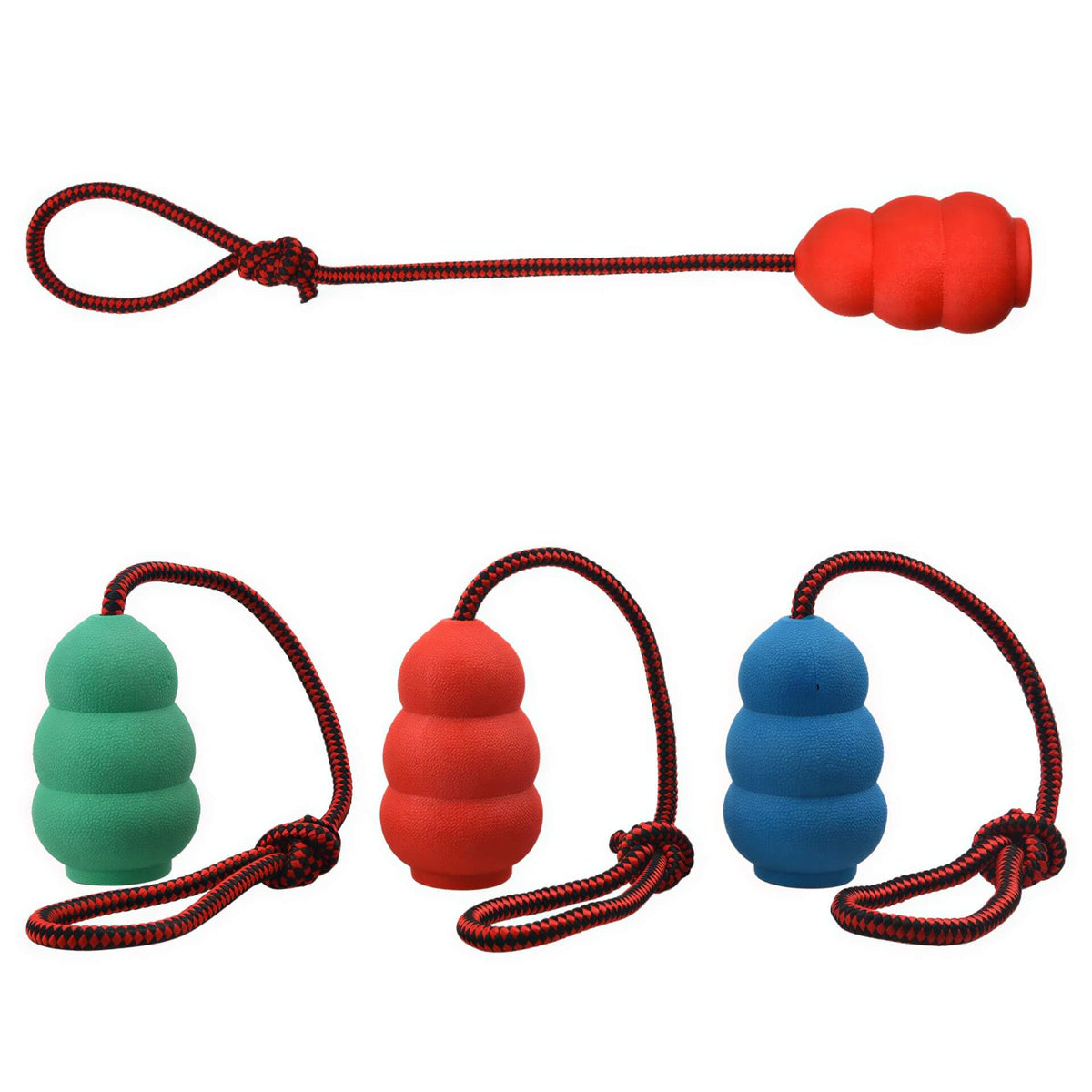
Rubber to bite, rope to grip
Natural rubber gives at the right rate for a full-strength pull. The rope gives a different texture to work at when the game is over.
Your hand stays clear of his teeth
The rope puts distance between your grip and his mouth - which matters when a dog gets excited and starts shifting his bite.
Two sizes, no guessing
9cm for puppies and toy breeds, 12cm for small and medium dogs. Sized so the toy can't disappear into the mouth.
Tug doesn't make a dog aggressive.
It's one of the most persistent myths in dog training — that tug teaches dominance, or winds a dog up, or makes them pushy. Studies looking at exactly this found the opposite: dogs who play tug with their owners come out more confident and more engaged with people, and it made no difference at all whether the dog or the human won.
How it works
What a game of tug actually does
Will it fit
puppies and toy breeds
small and medium dogs
natural, with give
keeps hands clear
Pick the size by your dog's mouth, not their enthusiasm. The 9cm suits puppies and toy breeds; the 12cm suits small and medium dogs. Neither is right for a large or powerful breed — a toy that fits entirely inside the mouth is a choking risk, not a bargain.
Simple to use
Teach the drop first, then play properly.
Teach the drop before you tug
Hold the toy still, stop pulling, and wait. The moment he lets go, mark it and hand it straight back. Giving it back is what teaches him that letting go doesn't end the fun - most dogs learn this inside a week.
Keep it low and sideways
Pull side to side rather than up and down, and keep the toy near the floor. Lifting a dog off their front feet puts the strain through the neck and spine. Let him do most of the pulling and match his effort rather than outmuscling him.
Let him win, then put it away
Lose on purpose a few times a session - the research says winning doesn't make dogs pushy, and losing every time makes them give up. End while he still wants more, and the toy goes in the cupboard until next time.
Great for
- Small and medium dogs
- Teething puppies, supervised
- Dogs who get mouthy or jumpy when they're excited
- Owners who want a reward they can use in training
- Restless dogs who've had the walk and still aren't settled
- Households where play happens indoors
Not ideal for
- Large or powerful breeds. At 12cm the toy fits inside the mouth, which is a choking risk.
- Unsupervised chewing. Rope strands that get swallowed can bunch the intestine - this is a play-with-you toy, not a leave-alone one.
- Dogs who guard their things. Sort the guarding first, with help if you need it.
- Dogs with dental problems or recent extractions - ask your vet before any tug.
- Dogs who shred rope rather than pull on it. Solid rubber only for those.
Not sure? Send us your pet's measurements and we'll tell you.
Playing tug the right way
Where the aggression myth came from
It came from an idea about dominance that dog training moved on from decades ago. When researchers actually tested it, dogs who played tug with their owners scored higher on confidence and engagement and showed no increase in aggression - and whether the dog won or lost made no measurable difference.
Why letting him win is the right call
A dog who never wins stops trying, and a game with no possible payoff isn't a reward you can train with. Lose a few rounds every session. What keeps the game under control is the release cue, not who ends up holding the toy.
The one rule worth enforcing
Teeth on skin ends the game. Not a telling-off, just a quiet stop - toy away, walk off, try again in five minutes. Dogs work that one out quickly, and it's the rule that keeps tug safe with children in the house.
Rope is a supervised material
The rope half makes this a better toy and a worse one to leave lying around. A dog who settles down to shred it will swallow the strands, and swallowed rope can bunch the gut into something surgical. Play with it, then put it away.
Product details
What's included
1 x rubber and rope tug toy in your chosen size
Care & maintenance
Rinse the rubber under the tap and let the rope dry completely before it goes back in the toy box — damp rope goes mouldy in the core where you can't see it. Check the rope every few sessions for loose or fraying strands and retire it when they appear.
Shipping
Free on every US order. Most arrive within 7-12 days. Tracking by email as soon as it ships.
Returns
Damaged, faulty or wrong item - tell us within 7 days and we'll replace or refund in full. We can't take change-of-mind returns, which is why every page says who it isn't for.
Ask before you buy
Send your pet's measurements, breed and age and we'll tell you honestly whether this suits - including when it doesn't.
Questions
Before you order
Doesn't tug make dogs aggressive?
No. It's a myth from an older model of dog behaviour. Studies that tested it directly found dogs who play tug with their owners are more confident and more engaged with people, with no rise in aggression - and it made no difference whether the dog won.
Should I let my dog win?
Yes, regularly. A dog who never wins gives up on the game, and then you've lost a reward you could have trained with. Control comes from a reliable release cue, not from always holding on.
Which size do I need?
9cm for puppies and toy breeds, 12cm for small and medium dogs. Go by mouth size, not enthusiasm - a toy that fits entirely inside the mouth is a choking risk.
Will it survive my dog?
For a small or medium dog tugging and chewing in supervised sessions, yes. If your dog's habit is to lie down and systematically dismantle a toy, the rope won't last and shouldn't be left with him anyway.
Can I leave him alone with it?
We'd rather you didn't. The rubber is fine; the rope is the problem. Swallowed strands can bunch the intestine, and that becomes surgery rather than an upset stomach. Play, then put it away.
My dog won't give it back.
Stop pulling and go still. A toy that doesn't move isn't a game. The second he releases, hand it straight back - that's the bit most people skip, and it's what teaches him that letting go isn't the end.
Is natural rubber safe if he swallows a piece?
Small pieces usually pass, but a toy that's started coming apart should be binned. Check it over every few sessions and retire it when the rubber splits or the rope frays.