


If this sounds familiar
He comes back from a wet walk and still smells faintly of damp dog two days later.
You've been using your own hair dryer on him and quietly wondering whether that's fine.
Bath night takes two hours because the towel-and-wait part never seems to finish.
Why you'll love it
The hair dryer in your bathroom runs far hotter than a dog's skin can take. Most people have no idea.
Heat a pet can actually take
Three settings, with the lowest barely warm. A human dryer runs hot enough to burn skin thinner than yours, and vets see the results of that regularly.
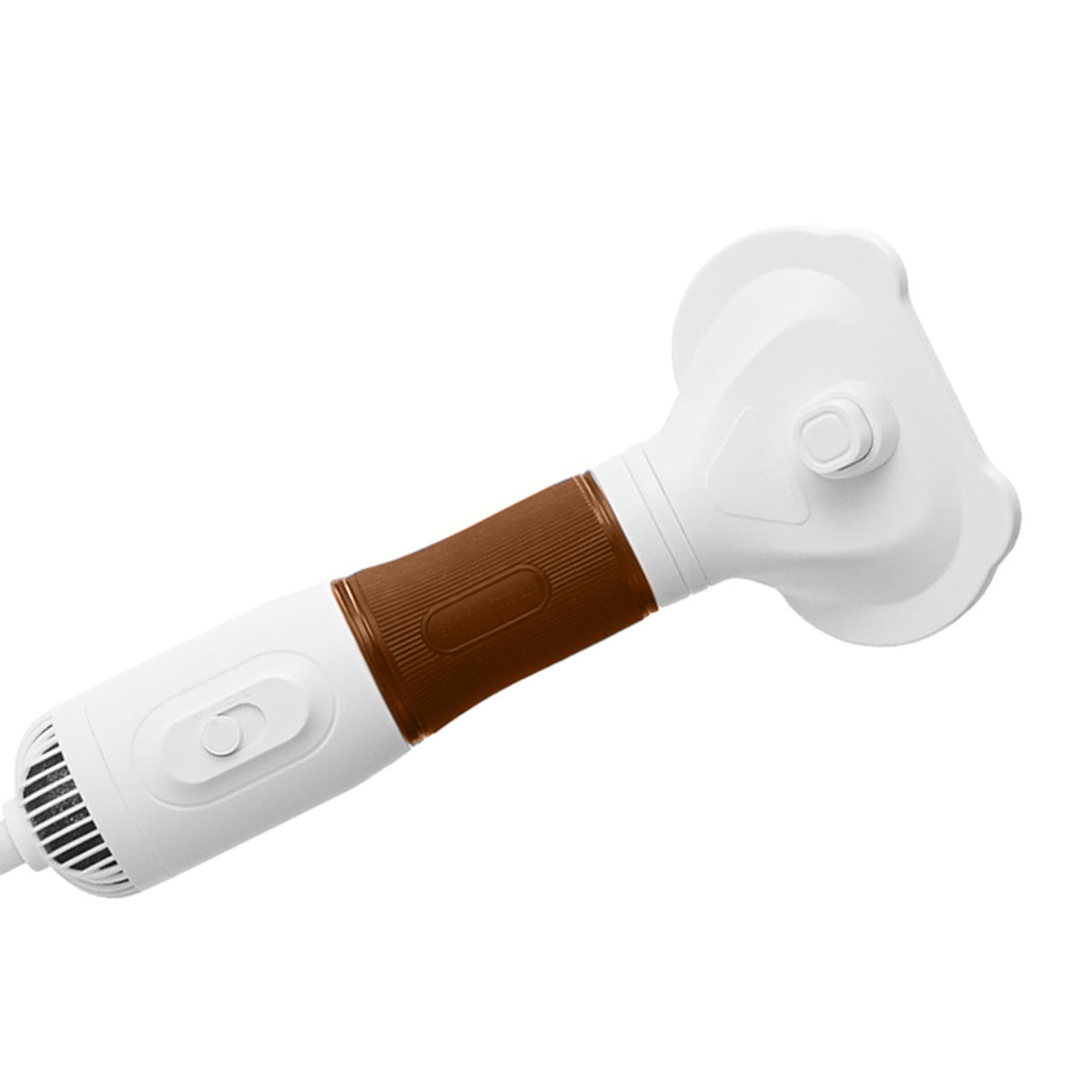
Dries and brushes in one pass
Bristles lift the coat apart while the air is moving, so warm air reaches the skin rather than skimming the surface. Halves the time and does a better job.
Wet or dry
Use it after a bath, or on a dry coat as a deshedder - the airflow lifts loose hair out instead of leaving it in there to drop on your sofa.
The bristle head comes off
Lifts away so you can clear the trapped hair, which is what keeps the airflow up and the motor from overheating.
A damp undercoat is where hot spots start.
Towel-dry a thick-coated dog and the surface feels dry within the hour while the layer against the skin stays wet for most of a day. Warm, damp and airless is exactly the condition that starts acute moist dermatitis — a hot spot — which can go from nothing to a raw, weeping patch the size of your palm in under twenty-four hours. Getting the undercoat properly dry is the whole reason to own a dryer.
How it works
Why you can't just use your own hair dryer
Will it fit
20,000 rpm
lowest for cats and puppies
reaches round a large dog
plus the brush head
Three heat settings, and the lowest is the one to use on cats, puppies and anything with thin skin. A 2m cable reaches around a large dog without unplugging. The detachable bristle head lifts off for cleaning, which matters more than it sounds — trapped hair is what blocks airflow and cooks a motor.
Simple to use
Towel first, let him hear it, keep it moving.
Towel the bulk off first
Press the water out with a towel rather than rubbing - rubbing tangles a long coat and you'll be fighting knots later. Get him as dry as a towel will manage before anything is switched on.
Let him hear it before he feels it
Switch it on across the room with the air pointed away, treat him, switch it off. Do that a few times over a couple of days. Noise is why most pets refuse to be dried, and you only get one chance to make a bad first impression.
Keep it moving, always
Never hold the air on one spot - keep the head travelling and work in the direction the coat grows. Check the air against the inside of your wrist every so often. Go carefully on the belly, the groin and the back legs where the skin is thinnest, and skip the face entirely.
Great for
- Double-coated breeds, where the undercoat stays wet for hours
- Dogs who come back soaked from every walk
- Long-haired cats who need drying after a bath
- Anyone currently using a human hair dryer on their pet
- Cutting bath night down from two hours to twenty minutes
- Deshedding on a dry coat - the airflow lifts loose hair out
Not ideal for
- Faces. Never aim it at the eyes, ears or nose.
- Pets left unattended. Stay with them the whole time it's running, every time.
- Flat-faced breeds in warm rooms - pugs, bulldogs, Persians overheat easily. Lowest setting, short bursts, cool room.
- Pets with sore, broken or inflamed skin - see a vet before drying the area.
- Anyone expecting silence. It's quieter than a human dryer, not quiet.
Not sure? Send us your pet's measurements and we'll tell you.
Dryers, burns, and why most pets hate them
Human hair dryers burn pets
Yours is built for a scalp under a full head of hair and runs far hotter than animal skin tolerates. Dogs have thinner skin than people and cats thinner again, and neither will tell you it's too hot until the damage is done. Burns on the belly and inner legs from owners' own dryers are a routine presentation at vet practices.
Why a damp undercoat causes problems
A thick coat holds water against the skin long after the surface feels dry. Warm, wet and airless is precisely the condition that triggers acute moist dermatitis - a hot spot - and those go from invisible to raw and weeping within a day. Drying properly down to the skin is the point of the exercise.
Noise is why dryers end up in cupboards
Most pets who refuse drying are refusing the sound, not the air. Introduce it across the room with the motor running and the air pointed away, pair it with food, and build up over several short sessions. Forcing a frightened dog through a drying once will cost you every drying after it.
Never walk away from a running dryer
Cage dryers left unattended have killed dogs through heat stress, which is why many groomers won't use them at all. This is handheld and far lower risk, but the rule stands: stay with your pet, keep the head moving, and stop the moment they seem distressed or the skin feels warm.
Product details
What's included
1 x pet hair dryer brush
2 x blowing nozzles
Care & maintenance
Pull the bristle head off and clear the hair out after every use, and check the air intake at the back — pet hair clogs it fast, and a blocked intake makes any dryer overheat. Wipe the body with a dry cloth. Never run it under water, and never use it on a pet who is still dripping.
Shipping
Free on every US order. Most arrive within 7-12 days. Tracking by email as soon as it ships.
Returns
Damaged, faulty or wrong item - tell us within 7 days and we'll replace or refund in full. We can't take change-of-mind returns, which is why every page says who it isn't for.
Ask before you buy
Send your pet's measurements, breed and age and we'll tell you honestly whether this suits - including when it doesn't.
Questions
Before you order
Can I just use my own hair dryer instead?
Please don't. A human dryer runs far hotter than animal skin tolerates, and your pet can't tell you it's burning until it already has. Vets see these burns regularly, usually on the belly and inner legs where the coat is thinnest.
How loud is it?
[CONFIRM DECIBEL RATING WITH SUPPLIER - do not publish until answered]
My dog is terrified of hair dryers. Will this change that?
Only if you introduce it properly. Run it across the room with the air pointed away, give him a treat, switch it off, and repeat over several days before it ever touches him. A pet who's been forced through one drying will fight every one after it.
Can I use it on a cat?
On the lowest setting, in short sessions, with a cat who tolerates handling. Cats have thinner skin than dogs and far less patience with noise, so plenty won't accept it at all - and if yours won't, don't push it.
Is it strong enough for a thick-coated dog?
600W at 20,000rpm handles a double coat, and the brush head is what makes the difference - lifting the coat apart lets the air reach the skin instead of skimming over the top.
Can I leave him with it while I do something else?
No. Stay with your pet the whole time, keep the head moving, and stop if the skin feels warm or he seems distressed. Unattended drying is how heat injuries happen.
How do I clean it?
Pull the bristle head off and clear the trapped hair after every use, then check the air intake at the back. Pet hair blocks intakes quickly, and a blocked intake makes any dryer overheat.