


If this sounds familiar
You open the drawer with the brush in it and she's already gone.
She's getting older and has stopped grooming her own back, and it's starting to look matted.
There's a hairball on the rug every few days and you'd rather she swallowed less of it.
Why you'll love it
The best brush in the world does nothing if your cat won't let you near her with it.
It feels like stroking
No tool coming towards them, no tugging. Pets who have refused every brush you own will usually sit through this without noticing what is happening.
Silicone tips, not wire bristles
Soft enough for a kitten or an elderly cat with thin skin, and nothing sharp to catch. Doubles as a massage for pets who enjoy one.
Works wet as well as dry
Wear them in the bath to work shampoo through the coat, which gets a dog properly clean far faster than hands alone.
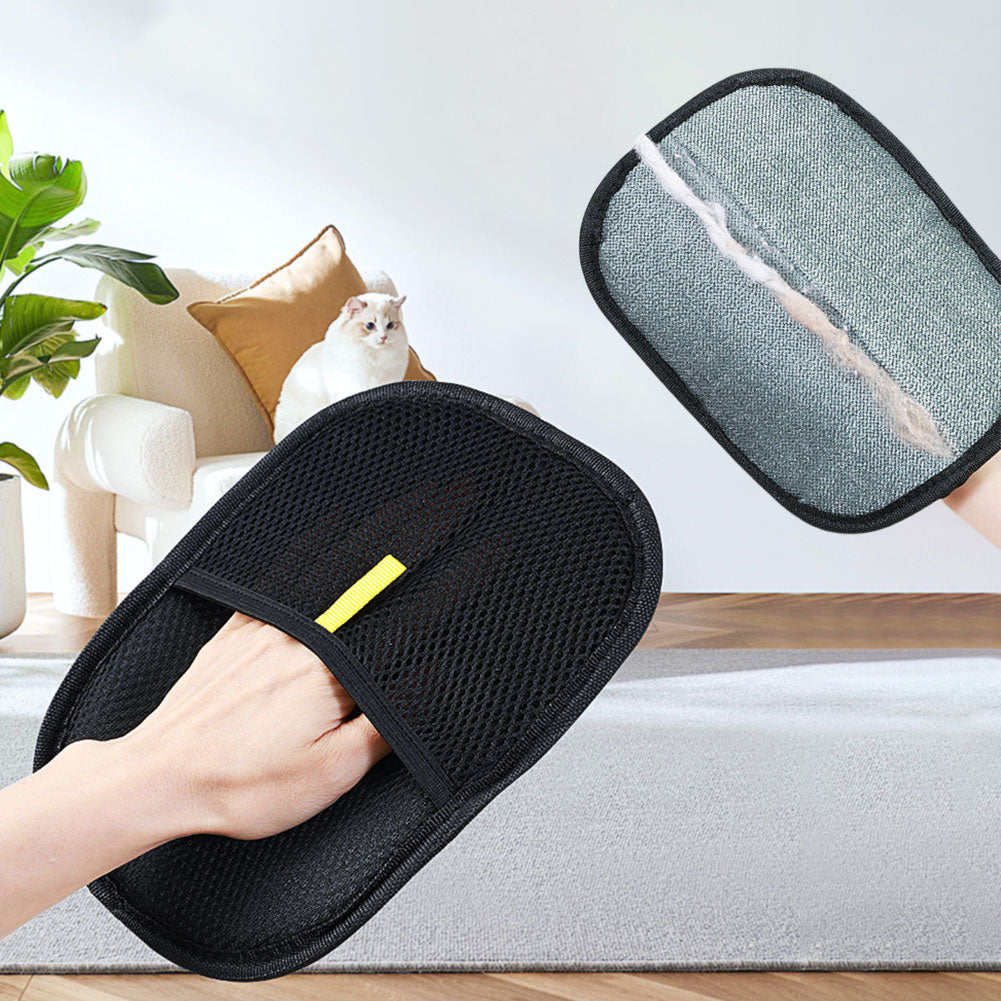
The hair peels off in one piece
Loose fur collects on the silicone and lifts away in a sheet. No picking it out of bristles, no tapping a brush on the bin.
She knows what a brush looks like. She has no idea what your hand is up to.
Plenty of cats and dogs have decided, usually after one bad session, that brushes are something to avoid. The cupboard opens and they're gone. A glove removes the tool from the equation entirely — from their side it's just a longer, slightly odd stroke — which is why pets who have refused every brush you own will sit through ten minutes of this.
How it works
Why a glove works on a pet that won't be brushed
Will it fit
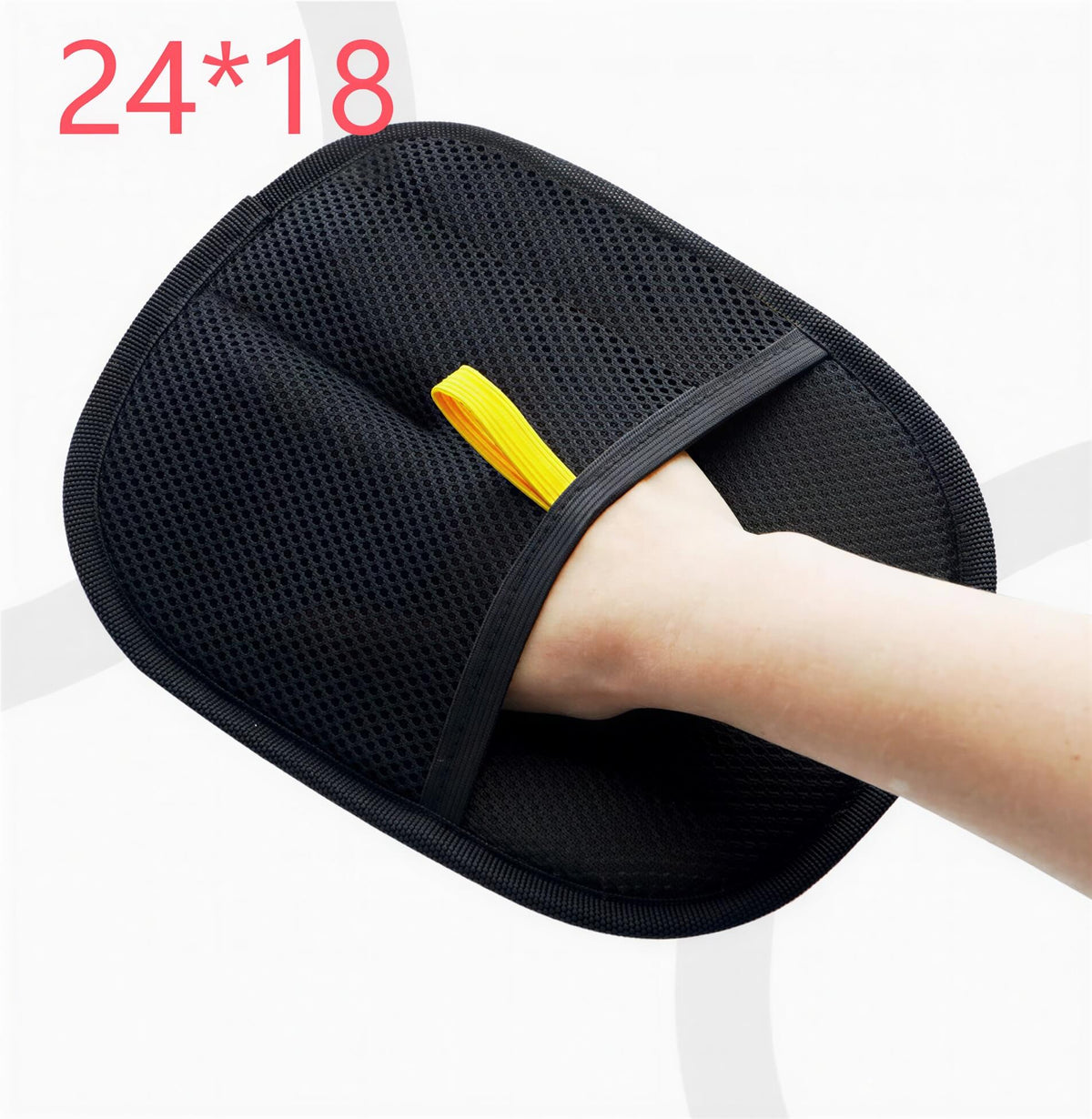
both hands
including bathtime
not wire bristles
not double or curly coats
Best on short and medium coats. On a double-coated breed it lifts the surface hair but won't reach the undercoat, where the shedding actually comes from — that needs an undercoat rake. On a curly coat it does almost nothing useful and can move the top layer without reaching the base, which encourages matting rather than preventing it.
Simple to use
Put it on, stroke her, keep it short.
Wear it and just stroke her
First session, do nothing else. No grooming, no holding her still - put the glove on and stroke her the way you normally would, for a minute. You're teaching her that nothing has changed.
Long strokes, with the coat
Head to tail, in the direction the hair grows, with light pressure. Go gently over the belly and the back legs where the skin is thin. Peel the collected hair off when the glove stops picking anything up.
Little and often beats a long session
Five minutes a few times a week does more than half an hour once a month, and it stays pleasant for both of you. During a heavy moult, daily.
Great for
- Cats and dogs who run from a brush
- Short and medium coats
- Elderly cats who can no longer groom their own backs
- Kittens and puppies being taught that grooming is fine
- Bathtime - working shampoo through a dog's coat
- Nervous or rescue pets who need handling kept gentle
Not ideal for
- Double-coated breeds - Huskies, German Shepherds, Golden Retrievers. It skims the top and leaves the undercoat, which is where the shedding comes from. You want an undercoat rake.
- Curly coats - poodles, doodles, bichons. A glove moves the surface without reaching the base and can encourage matting rather than prevent it. Slicker brush and comb.
- Mats of any kind. It won't touch them.
- Heavy seasonal moults on a thick coat, where you need something that actually pulls hair out.
- Pets who bite at hands. Bite-resistant isn't bite-proof.
Not sure? Send us your pet's measurements and we'll tell you.
What a grooming glove can and can't do
Why it works on nervous pets
Grooming refusal is almost always learned. One session where a brush caught a knot, or a rescue pet with a history you don't know, and the tool becomes the problem rather than the handling. A glove removes the tool - what the pet experiences is a stroke with a bit of texture to it - which is why it's often the only thing that gets a grooming routine started at all.
Loose fur and hairballs
Cats swallow fur when they groom themselves, and what doesn't pass through comes back up. The less loose hair sitting in the coat, the less she takes in. Regular brushing is the standard first suggestion for a cat bringing up hairballs - this just makes it possible on a cat who won't be brushed.
It will not reach the undercoat
On a double-coated breed the hair covering your sofa comes from the dense layer underneath the guard hairs. A glove passes over the top of it. If you have a Husky or a Golden Retriever and you're buying this to stop the shedding, it will disappoint you - you want an undercoat rake or a deshedding tool.
Curly coats need a comb
Poodles, doodles and bichons mat at the base, close to the skin, where a glove cannot get. Worse, moving the top layer while the base stays untouched is how matting starts. Those coats need a slicker brush followed by a metal comb, every few days, properly.
Product details
What's included
1 x pair of grooming gloves
Care & maintenance
Peel the hair off in a sheet after each use, then rinse the silicone side under the tap and hang them to dry. The mesh backing takes a while to dry properly, so don't fold them away damp. No washing machine.
Shipping
Free on every US order. Most arrive within 7-12 days. Tracking by email as soon as it ships.
Returns
Damaged, faulty or wrong item - tell us within 7 days and we'll replace or refund in full. We can't take change-of-mind returns, which is why every page says who it isn't for.
Ask before you buy
Send your pet's measurements, breed and age and we'll tell you honestly whether this suits - including when it doesn't.
Questions
Before you order
Will it stop my dog shedding everywhere?
On a short or medium coat it makes a real difference. On a double-coated breed it will not - the shedding comes from the undercoat and a glove skims over the top of it. That needs an undercoat rake, and we would rather tell you now than take the order.
My cat hates being brushed. Will she tolerate this?
Usually, and that is the main reason to buy it. There is no tool coming at her and no tugging, so from her side it is a slightly textured stroke. Start by just wearing it and stroking her normally for a minute, with no grooming at all.
Will it help with hairballs?
It helps. Cats swallow loose fur while grooming themselves, and taking that fur out of the coat first means less of it going in. If she is bringing up hairballs frequently, or retching without producing one, that is worth a vet conversation too.
Does it work on a doodle or a poodle?
Not really. Curly coats mat at the base, close to the skin, and a glove only moves the top layer - which can make matting worse rather than better. Those coats need a slicker brush and a metal comb.
Can I use it in the bath?
Yes, and it is one of the better uses. Wearing them to work shampoo through a dog's coat gets him properly clean much faster than hands alone.
Is it really bite-proof?
Bite-resistant rather than bite-proof. The material holds up to normal mouthing, but a determined dog will get through anything. If yours bites at hands during grooming, sort that first.
How do I clean them?
Peel the hair off in a sheet, rinse the silicone side under the tap, and hang them up. The mesh backing takes a while to dry, so do not fold them away damp. No washing machine.