


If this sounds familiar
He coughs and hacks for a minute after every lunge at a squirrel, and you've started to worry about it.
The harness you've got rubs him raw under the front legs on anything longer than twenty minutes.
You're walking him in the dark both ways now and drivers aren't seeing him until they're close.
Why you'll love it
Every time a dog hits the end of a lead on a collar, all of that lands on his windpipe.
Nothing on the throat
Lead pressure goes through the chest and shoulders instead of a narrow band over the windpipe. On a dog who lunges, that difference is the whole point.
Four sizes, measured properly
40-60cm, 55-70cm, 66-90cm and 78-105cm around the chest. Real measurements rather than guessing from breed or weight.
Reflective on both sides
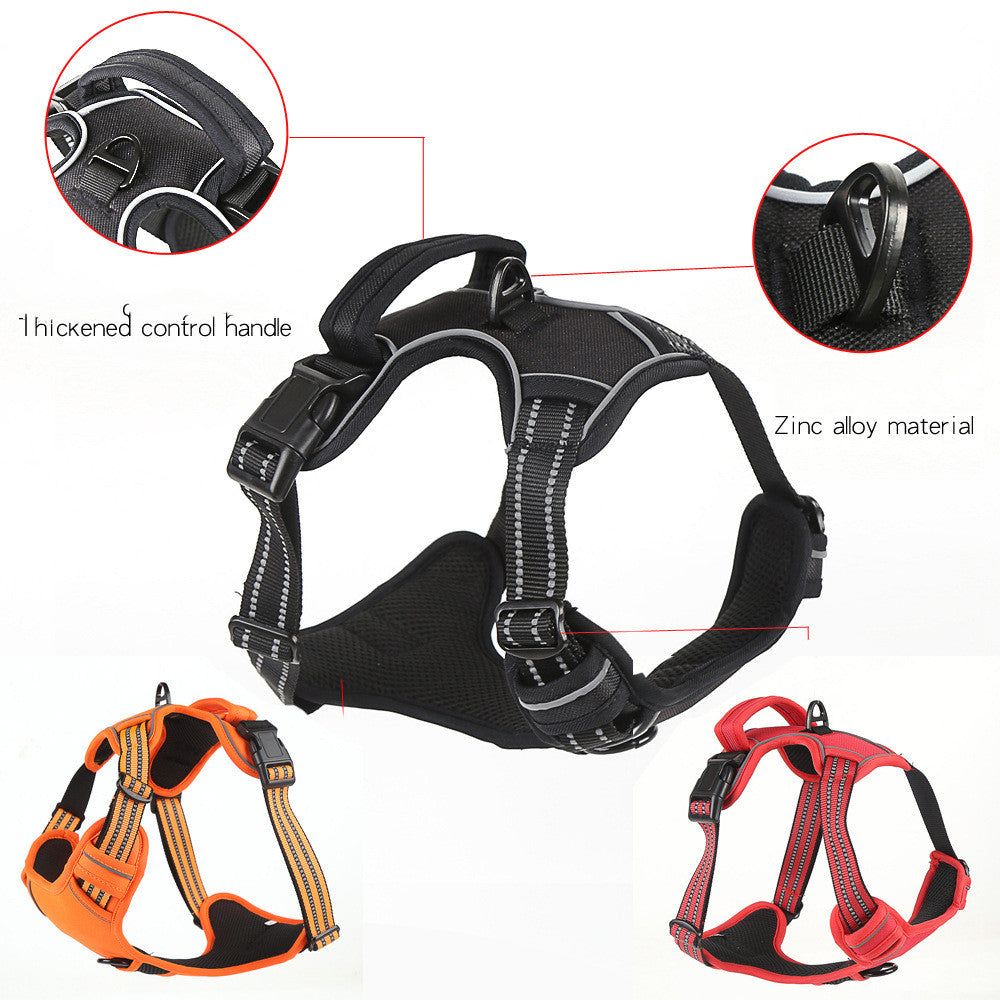
Strips that light up in headlights. Worth more than it sounds once you're doing both walks in the dark.
Mesh that breathes
Polyester mesh rather than solid webbing, so it doesn't trap heat against the chest on a long summer walk.
Measure him before you order. It takes thirty seconds.
Take a soft tape measure right round the widest part of his ribcage, just behind the front legs, with the tape snug but not tight. That number is the only one that matters — breed and weight tell you almost nothing, because two dogs of identical weight can be twenty centimetres apart in the chest. If he falls between two sizes, go up.
How it works
Why a harness and not a collar
Will it fit
around the chest
around the chest
around the chest
around the chest
Measure around the widest part of the ribcage, just behind the front legs. S fits 40-60cm, M fits 55-70cm, L fits 66-90cm, XL fits 78-105cm. Between sizes, take the larger one — a harness that's slightly loose is adjustable, one that's slightly tight rubs the armpits raw on a long walk.
Simple to use
Measure, fit to two fingers, then walk.
Measure before you order
Soft tape right round the widest part of the ribcage, just behind the front legs, snug but not tight. Breed and weight tell you very little - two dogs the same weight can be twenty centimetres apart in the chest. Between sizes, size up.
Fit it to two fingers
You should be able to slide two flat fingers under any strap, and no more. Looser and he backs out of it; tighter and it rubs the armpits raw. Check it again after the first couple of walks - harnesses settle and need a second adjustment.
Short walks first
Ten minutes the first few times, then check under the front legs and around the chest for any redness. Most rubbing problems show up early and are fixed by moving one strap a notch.
Great for
- Dogs who pull, lunge or cough on the lead
- Walking in the dark - reflective strips on both sides
- Breeds prone to tracheal collapse, where collar pressure is a real risk
- Summer walks, where solid webbing traps heat
- Dogs who back out of collars
- Anyone switching from a collar for the first time
Not ideal for
- Dogs who chew their own harness off. Polyester mesh won't survive it.
- Tie-outs or tethering. A harness is for walking on a lead with you holding it.
- Dogs between sizes who've been ordered the smaller one - size up instead.
- Replacing training. A harness manages pulling; it doesn't teach loose-lead walking.
- Leaving on unsupervised at home - straps catch on things.
Not sure? Send us your pet's measurements and we'll tell you.
Harnesses, collars and pulling
What a collar does to a dog who pulls
All the force of a lunge lands on a narrow band directly over the windpipe. There's a recognised association between collar pressure and tracheal damage, and studies have measured a rise in pressure inside the eye too - which matters for breeds already predisposed to glaucoma. A harness spreads the same force across the chest and shoulders, which are built to take it.
Why front clips work and back clips don't
Dogs have an opposition reflex: push them and they push back. A lead clipped to the back of a harness pulls them backwards, they lean into it, and you've built a sled dog. A clip at the chest turns their momentum sideways instead - they pull, they end up facing you, and pulling stops getting them anywhere. If pulling is your problem, the clip position is what matters, not the word on the label.
The two-finger rule
Two flat fingers under any strap, and no more. Too loose and a determined dog reverses straight out of it, usually at the worst possible moment. Too tight and the straps rub the thin skin under the front legs raw within a couple of long walks. Re-check the fit after the first week, because every harness settles.
A harness is management, not training
It makes pulling less effective and less damaging. It doesn't teach a dog to walk on a loose lead - that comes from stopping every time the lead goes tight and rewarding him when it's slack, over weeks. Use the harness to stop him hurting himself while you do the actual work.
Product details
What's included
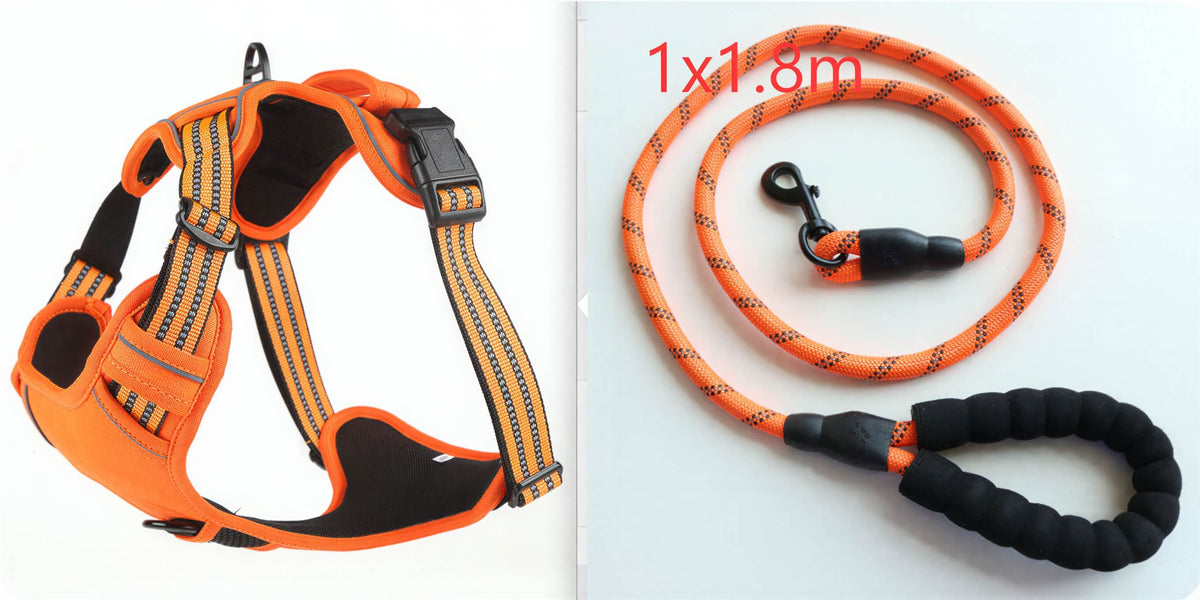
1 x no-pull harness in your chosen size and colour
Care & maintenance
Hand wash in cool water with a little mild detergent and air dry — a machine wash wears the reflective strips and warps the buckles. Rinse the salt off after a beach walk. Check the stitching at the D-ring and the buckle webbing every few weeks, and retire it the moment either looks frayed.
Shipping
Free on every US order. Most arrive within 7-12 days. Tracking by email as soon as it ships.
Returns
Damaged, faulty or wrong item - tell us within 7 days and we'll replace or refund in full. We can't take change-of-mind returns, which is why every page says who it isn't for.
Ask before you buy
Send your pet's measurements, breed and age and we'll tell you honestly whether this suits - including when it doesn't.
Questions
Before you order
How do I measure him?
Soft tape measure right round the widest part of the ribcage, just behind the front legs, snug but not tight. That measurement is the only one that counts - breed and weight are unreliable, because two dogs of identical weight can be twenty centimetres apart in the chest.
He's between two sizes. Which do I take?
The larger one, every time. A slightly loose harness adjusts down; a slightly tight one rubs the skin under the front legs raw and there's nothing you can do about it.
Will it actually stop him pulling?
It stops the pulling landing on his throat, which is the health argument and it holds regardless. Whether it reduces the pulling itself depends on the clip position - a chest attachment turns him towards you, a back attachment doesn't. And no harness teaches loose-lead walking; that's training.
Can he back out of it?
Not if it's fitted properly - two flat fingers under any strap and no more. Nearly every escape is a harness that was left too loose. Re-check the fit after the first week; they all settle.
Why not just use a collar?
For a dog who walks nicely, a collar is fine. For one who pulls or lunges, every bit of that force lands on the windpipe, and there's a documented link between that and tracheal damage. Small breeds and flat-faced breeds are most at risk.
Can I leave it on him at home?
Better not to. Straps catch on furniture and crate bars, and a harness worn constantly rubs over time. On for walks, off at home.
How do I wash it?
Hand wash in cool water with mild detergent and air dry. A machine wash wears the reflective strips and warps the buckles. Rinse the salt out after a beach walk.