


If this sounds familiar
Her claws are black and every guide you've read tells you to look for the pink bit.
You take a tiny sliver, stop, take another, stop, and twenty minutes later you've done two claws.
You've been paying a groomer purely because you can't see what you're doing.
Why you'll love it
Every guide to trimming claws says "hold it up to the light and find the pink." That advice is useless on a black claw.
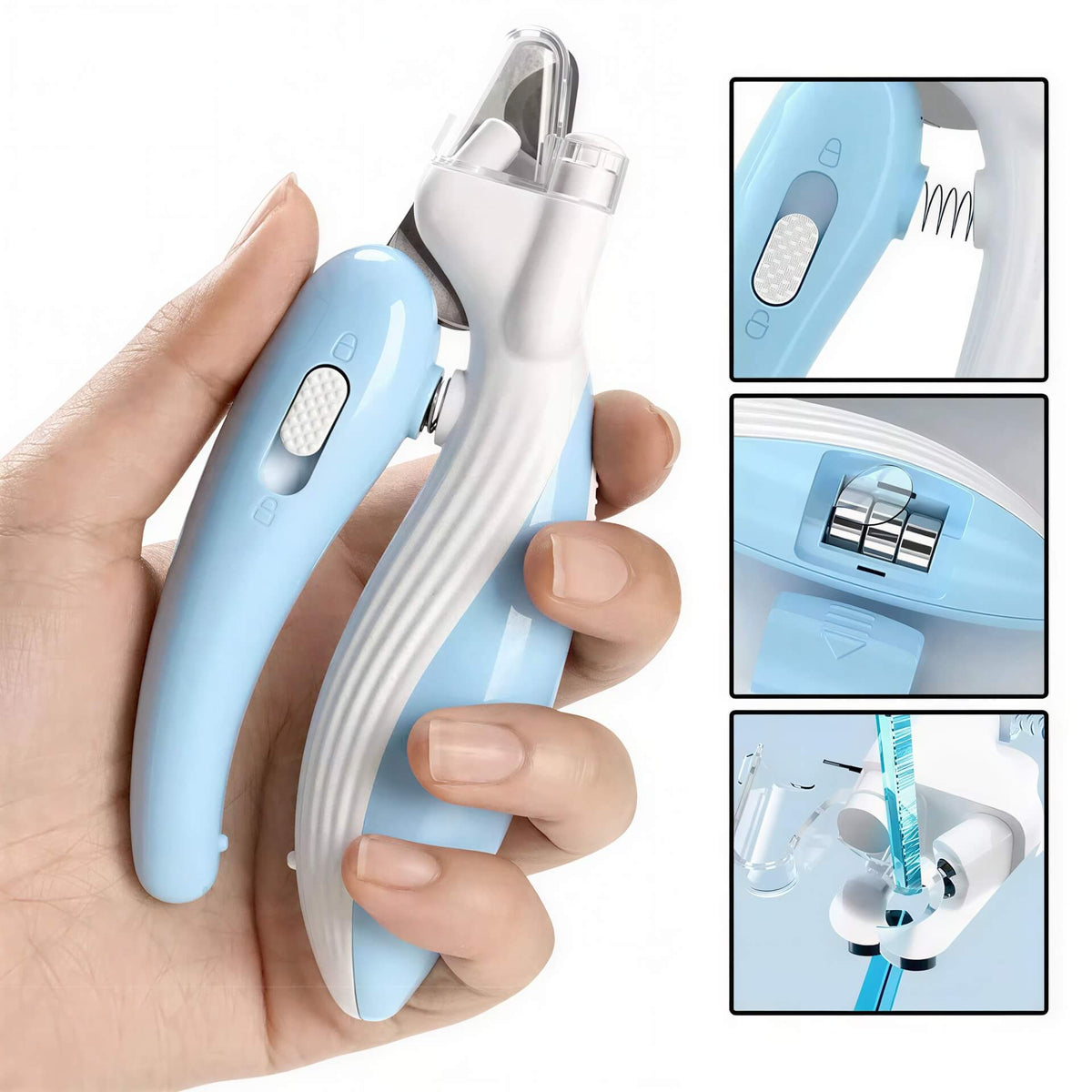
Lights the quick from inside
An LED under the claw makes the hard outer shell glow while the quick shows up as a shadow. On a black claw that is the difference between seeing and guessing.
Half-moon stainless blade
Curved to cut with the shape of the claw rather than across it, so it slices in one pass instead of crushing and splitting.
Catches the clippings
A built-in collector holds the cut pieces instead of firing them across the room. Small thing, and you notice it every single time.
Locks shut
A safety catch so it won't spring open in a drawer or a grooming bag - which matters with a blade this sharp and children in the house.
If her claws are black, you have been guessing.
On a pale claw the quick shows as a pink core and the job is easy. On a black one there is nothing to see at all — which is why owners of black cats and dark-clawed dogs either take sliver after sliver hoping to stop in time, or give up and pay a groomer. A light behind the claw turns that guess into something you can look at.
How it works
How a light shows you what is inside a claw
Will it fit
shows the quick as a shadow
sized for an adult hand
light, not flimsy
won't open in a drawer
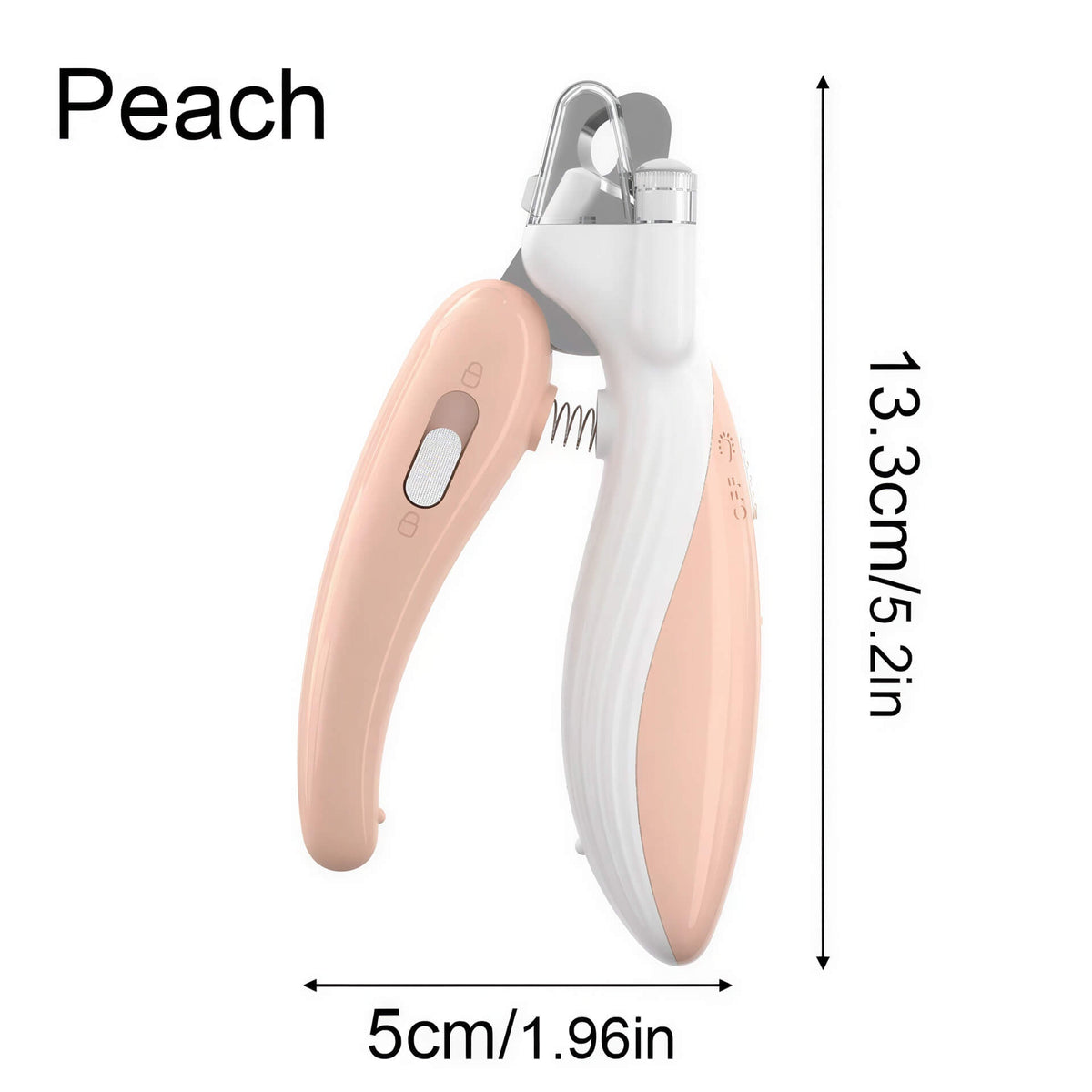
133mm long and 77g — sized for an adult hand and for cats and small to medium dogs. Larger breeds with very thick claws need a heavier clipper. The LED works on most claws; on a very thick, very dark claw the shadow is fainter, so take thin slivers and check the cut end as you go.
Simple to use
Switch the light on, cut below the shadow, stop early.
Catch her sleepy, light on
After a meal or a nap, not mid-play. Sit her in your lap facing away from you, switch the LED on, and press gently on the pad to extend one claw. Keep styptic powder within reach - you probably won't need it, and having it there is what lets you relax.
Cut below the shadow
Hold the claw against the light. The shell glows and the quick appears as a darker core. Cut the clear tip, a couple of millimetres short of where the shadow ends. If the shadow is faint, take a thin sliver and look at the cut surface - pale and chalky means keep going.
Stop before she has had enough
Two or three claws, a treat, and let her go. Front paws only, every two to four weeks. Cats who get trimmed often stop minding it; cats who get trimmed twice a year never do.
Great for
- Black cats and dark-clawed dogs, where the quick is invisible
- Anyone who has been paying a groomer purely because they cannot see
- Mixed households where some claws are pale and some are dark
- Cats, kittens, puppies and small to medium dogs
- Grooming bags and drawers - the lock keeps it shut
- Anyone tired of hunting clipped claws out of the carpet
Not ideal for
- Large breeds with very thick claws - they need a heavier clipper.
- Complete beginners who want the depth decided for them. Our 2mm safety-stop clipper caps every cut and costs less.
- Very thick dark claws, where the shadow is faint. It still helps - just take thin slivers and check as you go.
- Birds and reptiles, whatever the supplier listing says. Their claws bleed heavily and that is a vet job.
- Cats who genuinely panic at having their paws held rather than just objecting.
Not sure? Send us your pet's measurements and we'll tell you.
Dark claws, LEDs and which clipper to buy
Why black claws are the hard ones
A pale claw is translucent enough to show the quick as a pink core against daylight, and the whole job becomes easy. A black claw shows nothing. That single difference is why owners of black cats and dark-clawed dogs are the ones paying a groomer twenty pounds a visit for a two-minute job.
What the light actually shows you
Keratin passes light. With an LED underneath, the outer shell glows and the quick - denser and full of blood - blocks it, appearing as a darker core inside. You are reading an actual shadow rather than hoping. On a thin or moderately dark claw it is obvious; on a very thick black claw it is fainter but still more than you had before.
The clipping catcher
Nobody puts this on a box front and everybody notices it. Cut claws ping off at speed and end up under the sofa, in the rug, and occasionally in someone's foot a week later. A collector that holds them means the session ends when you put the clippers down rather than when you have finished hoovering.
Which of our three clippers you want
This one if her claws are dark and you cannot see the quick. The 2mm safety-stop clipper if you are new to this and want the depth decided for you - it physically cannot cut deeper. The open-aperture trimmer if her claws are pale, you know what you are doing, and you want speed. All three do the same job; they differ in how they keep you off the quick.
Product details
What's included
1 x LED pet nail clippers in your chosen colour
Care & maintenance
Wipe the blades dry after each use and empty the clipping catcher. Keep the safety lock engaged when it is in a drawer. Don't run it under water — there's an LED and a battery in the handle. Blades dull over time; if the claw starts splitting rather than cutting cleanly, replace them.
Shipping
Free on every US order. Most arrive within 7-12 days. Tracking by email as soon as it ships.
Returns
Damaged, faulty or wrong item - tell us within 7 days and we'll replace or refund in full. We can't take change-of-mind returns, which is why every page says who it isn't for.
Ask before you buy
Send your pet's measurements, breed and age and we'll tell you honestly whether this suits - including when it doesn't.
Questions
Before you order
Does the light really work on black claws?
On most of them, yes. Keratin passes light, so the outer shell glows and the quick shows as a darker shadow inside it. On a very thick, very dark claw the shadow is fainter - you still take thin slivers and check the cut surface, but you are working from something visible rather than from nothing.
How is this different from your other two clippers?
All three keep you off the quick, in different ways. This one lights it up, for dark claws. The 2mm safety-stop caps how deep you can cut, for beginners. The open-aperture trimmer lets you see and choose, for pale claws and confident hands.
What if it bleeds anyway?
Press a clean cloth to the tip for a minute or two. Styptic powder from any pet shop stops it fastest; cornstarch or plain flour pressed into the tip works if you have none. Worth buying a pot before your first attempt. If it has not stopped after ten minutes, call your vet.
What powers the LED?
[CONFIRM WITH SUPPLIER - is the battery replaceable, and is it included? Do not publish until answered.]
Will it work on my dog?
On a puppy or a small to medium breed, yes. A large dog with thick claws needs a heavier clipper - you would be fighting it.
How often do claws need doing?
Every two to four weeks for most indoor cats, front paws only. Back claws wear down on their own. Dogs vary with how much pavement they walk on - if you can hear them coming across a hard floor, they are due.
My cat will not let me near her paws.
Don't start with the clippers. For a week, hold a paw for two seconds and give a treat. Then press a pad to extend a claw and give a treat. Once that is boring to her, add the clippers and do one claw. If she genuinely panics rather than just objects, your vet or a groomer can do it in a couple of minutes.