


If this sounds familiar
You're paying a groomer twenty dollars for something that should take two minutes at home.
You bought clippers once, caught the quick, and they've been at the back of a drawer ever since.
She won't hold still, her claws are dark, and you can't see where it's safe to cut.
Why you'll love it
Most cat clippers assume you already know what you're doing. This one assumes you don't.
2mm, and no further
The aperture only admits 2mm of claw. However hard you squeeze, that is all that comes off - so the depth stops being a judgement call.
Sharp for years, not months
3Cr13 hardened stainless holds an edge through hundreds of trims. Blunt blades are what crush and split a claw instead of cutting it cleanly.
A grip that survives a wriggle
Cushioned non-slip handles stay put in your hand when she decides she has had enough - which is usually the moment something goes wrong.
Made for people who have never done this
If you have been paying a groomer because you did not trust yourself with a blade, this is the one to start on.
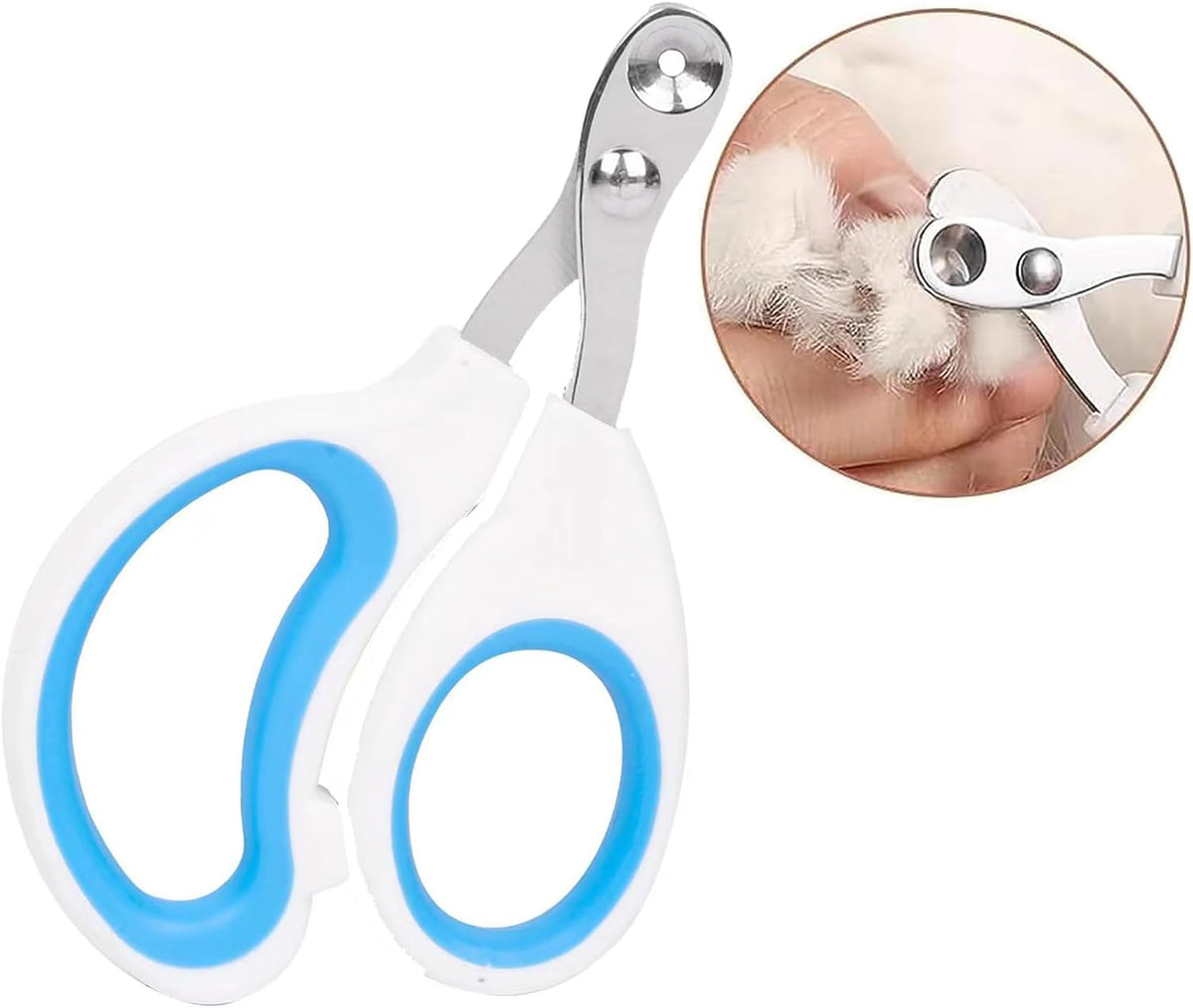
The fear isn't the cutting. It's cutting too far.
Ask anyone who's nicked a quick once — they never quite relax about it again, and the clippers end up in a drawer. A tool that physically can't take more than 2mm removes the part you're actually worried about, which is the only thing standing between most owners and doing this at home.
How it works
What the 2mm stop actually does
Will it fit
you cannot go deeper
no replacements needed
kittens to seniors
puppies and toy breeds
Built for cats, and fine on puppies and toy breeds. Anything larger than a spaniel has claws too thick for a 2mm aperture — you'd be there all evening. Not for birds or reptiles, whatever the supplier listing says; their claws bleed heavily and that's a job for a vet.
Simple to use
Catch her sleepy, take 2mm, stop early.
Catch her sleepy
After a meal or a nap, not mid-play. Sit her in your lap facing away from you and press gently on the pad to extend one claw. Have styptic powder within reach before you start - you probably will not need it, and having it there is what lets you relax.
Slide it in and squeeze
Feed the tip of the claw through the hole until it stops, then close the handles in one clean motion. The aperture does the measuring, so you are not judging the depth. If the claw is long, take a second 2mm rather than forcing more through in one go.
Stop early, treat, walk away
Two or three claws is a full session. Front paws only, every two to four weeks. Cats who get trimmed often stop minding it; cats who get trimmed twice a year never do.
Great for
- Cats and kittens
- First-time trimmers and anyone nervous with a blade
- Owners currently paying a groomer for nail trims
- Cats with pale claws where the quick is easy to misjudge
- Puppies and small dogs
- Older cats who have stopped wearing their claws down
Not ideal for
- Dogs larger than a spaniel - claws too thick for a 2mm aperture
- Badly overgrown claws, where the quick has grown out and 2mm can still reach it
- Birds and reptiles, whatever the supplier listing says. Their claws bleed heavily and that is a vet job.
- Cats who genuinely panic at having their paws held rather than just objecting
- Anyone who wants speed. Capped cuts mean more passes.
Not sure? Send us your pet's measurements and we'll tell you.
Depth, dark claws and which clipper to buy
Why depth is the whole problem
Everything that goes wrong with claw trimming is one mistake: going too deep. The quick bleeds, it hurts, and the cat remembers - which means the next attempt is harder than the first. Take that one decision away from the person holding the clippers and almost nothing else can go wrong.
Dark claws, and how to work blind
On a black claw you cannot see the quick, so you work by feel instead. Take a very thin sliver off the tip and look at the cut end. Pale and chalky means keep going. A small dark or moist-looking dot in the centre means you have reached the start of the quick - stop there.
What to do if it bleeds anyway
Stay calm; it looks far worse than it is. Press a clean cloth to the tip and hold for a minute or two. Styptic powder from any pet shop stops it fastest, and cornstarch or plain flour pressed into the tip works if you have none. Worth buying a pot before your first attempt. If it has not stopped after ten minutes, call your vet.
Which of our two clippers you want
This one if you are new to it, if your cat will not sit still, or if you have been leaving it to a groomer. Our open-aperture trimmer if you are confident, or if her claws are long enough that 2mm a pass would take all evening. Same price, different jobs.
Product details
What's included
1 x cat nail clippers in your chosen colour
Care & maintenance
Wipe the blades dry after each use and store them closed. 3Cr13 resists rust well but won't tolerate being left damp. Keep the aperture clear of clippings — a blocked hole stops the claw seating properly and the cut comes out ragged. Out of reach of children.
Shipping
Free on every US order. Most arrive within 7-12 days. Tracking by email as soon as it ships.
Returns
Damaged, faulty or wrong item - tell us within 7 days and we'll replace or refund in full. We can't take change-of-mind returns, which is why every page says who it isn't for.
Ask before you buy
Send your pet's measurements, breed and age and we'll tell you honestly whether this suits - including when it doesn't.
Questions
Before you order
Can I still cut too far with this?
It is much harder, but not impossible. The aperture caps each cut at 2mm, which on a normally maintained claw is just the clear tip. If her claws are badly overgrown the quick has grown out with them and 2mm can still reach it. Take one pass, look at the cut end, and stop if the centre looks dark or moist.
What if it bleeds anyway?
Press a clean cloth to the tip for a minute or two. Styptic powder from any pet shop stops it fastest; cornstarch or plain flour pressed into the tip works if you have none. Worth having some in before your first attempt. If it has not stopped after ten minutes, call your vet.
Is 2mm enough to be worth doing?
For a cat, yes - 2mm is roughly the clear hook you are meant to be taking anyway. For a small dog with thicker claws you will want two or three passes per nail, which is slower but no less effective.
How is this different from your other cat nail clippers?
That one has an open aperture, so you choose how much comes off. Faster once you are confident, and better for catching up on overgrown claws. This one limits every cut to 2mm, which is what you want while you are still learning.
How often do cats need doing?
Every two to four weeks, front paws only. Back claws wear down on their own and rarely need touching. Older cats often need doing more often, because they stop using their scratching post as much.
My cat will not let me near her paws.
Do not start with the clippers. For a week, just hold a paw for two seconds and give a treat. Then press a pad to extend a claw and give a treat. Once that is boring to her, add the clippers and do one claw. If she genuinely panics rather than just objects, do not push it - your vet or a groomer can do it in a couple of minutes.
Will these work on my dog, or on birds and reptiles?
Puppies and small breeds, yes. Anything larger than a spaniel has claws too thick for a 2mm aperture. We would steer you away from birds and reptiles entirely - their claws bleed heavily and that is a job for a vet.
