


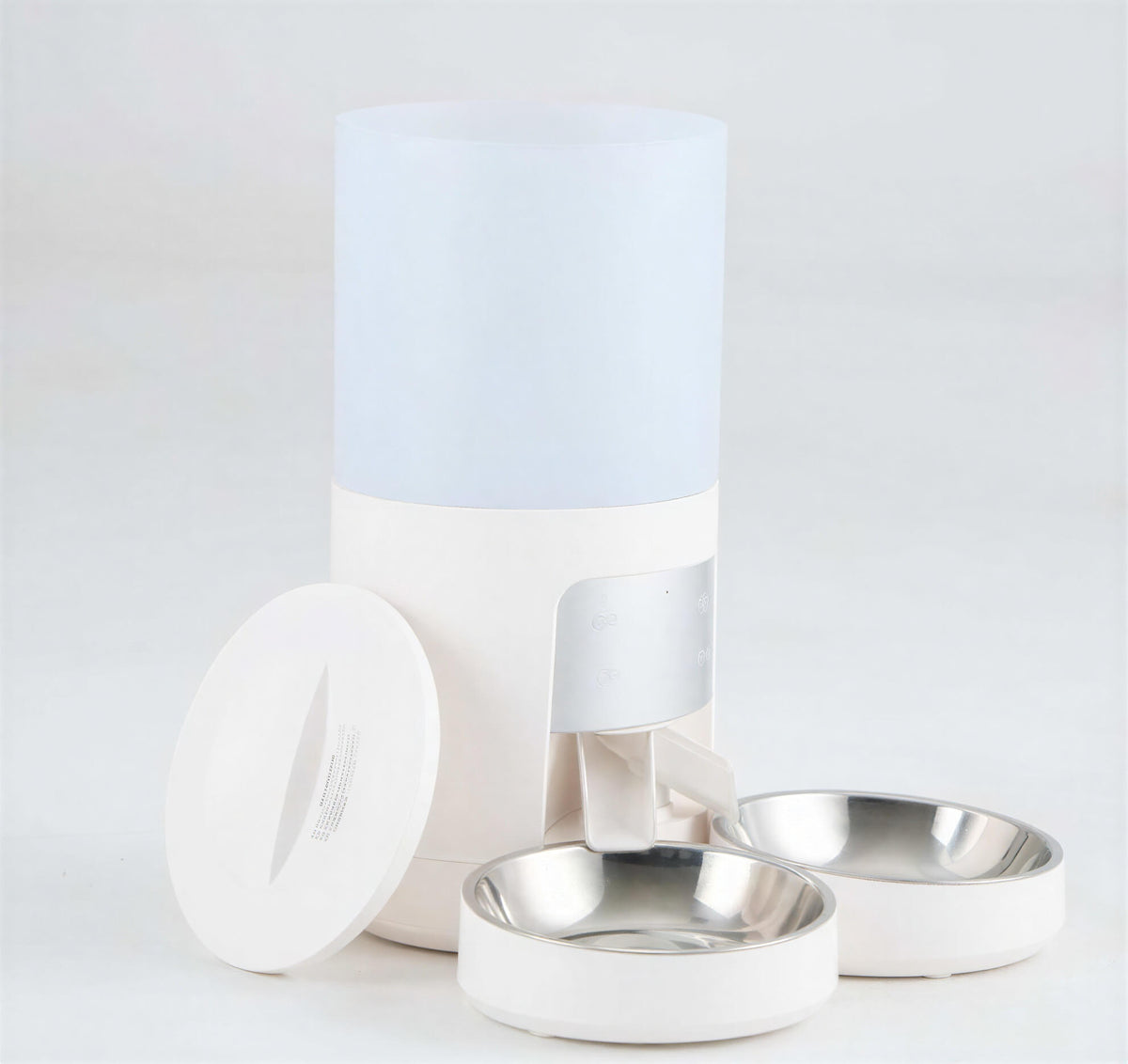
If this sounds familiar
You're feeding by eye twice a day, and the vet has asked you to start measuring it instead.
Work ran late again, so dinner was two hours after it should have been - and they let you know about it.
You've tried an automatic feeder before and came home to find it had jammed, or the power had tripped, and nobody had eaten.
Why you'll love it
The thing most automatic feeders get wrong isn't the feeding. It's what happens when they stop.
Portions, not a full bowl
1 to 50 portions per meal at roughly 10g each, up to 10 meals a day. If your vet has you measuring food, this is the tool that does it the same way every time.
A backup that works when the power doesn't
Three D cells keep the schedule running through a tripped breaker or an unplugged adapter. Both alarms - low food and low battery - fire on the device and in the app.
You can check that it fed them
Seven days of feeding records in the app, so when you're away you can see the 6pm meal actually dispensed rather than hoping it did.
Your voice at mealtimes
A 10-second recording plays when the food drops, which is what gets a nervous pet to the bowl. It mutes itself between 10pm and 7am so it isn't calling them in the night.
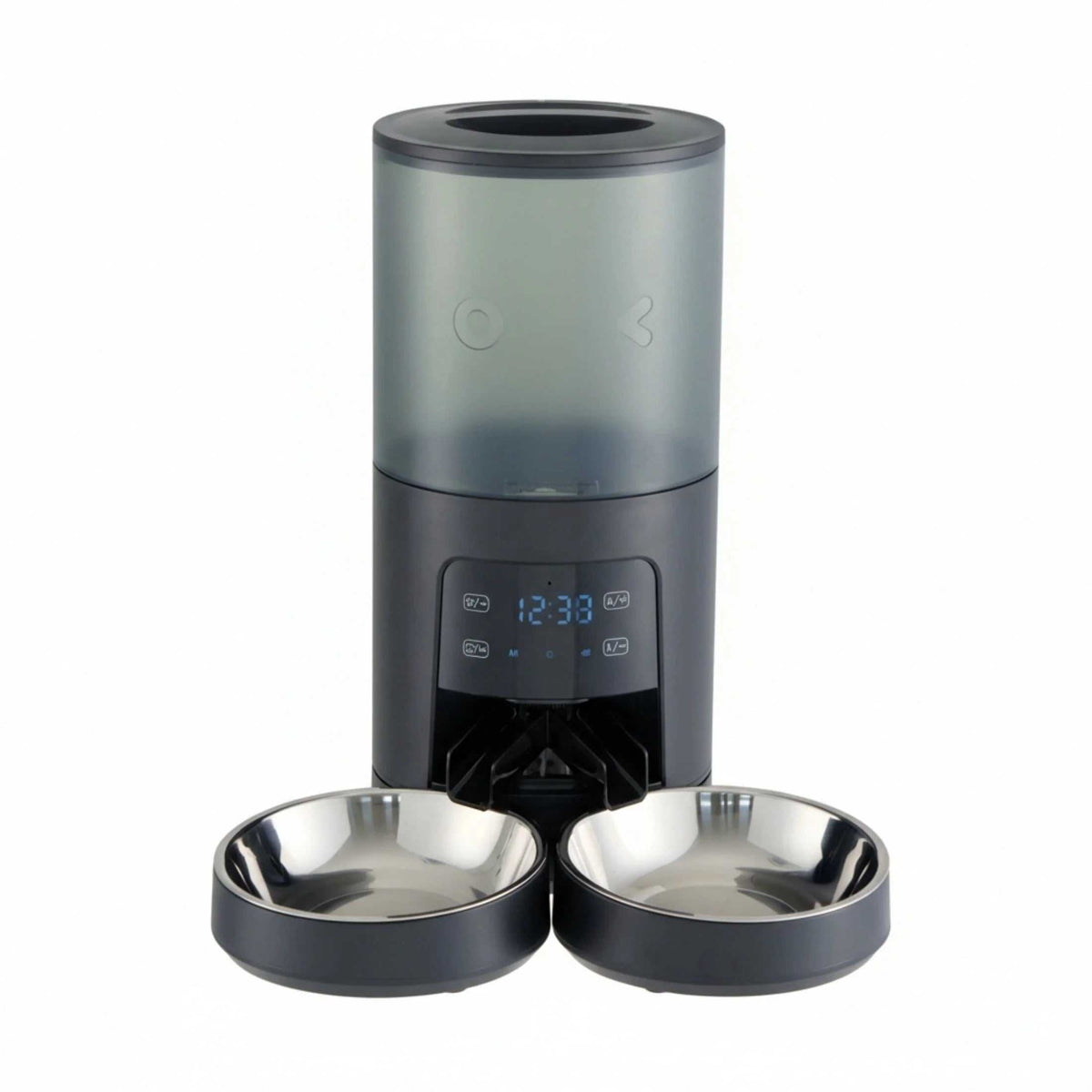
The battery backup is the best thing about it. The batteries aren't in the box.
Three D cells, bought separately and fitted before you go anywhere. On mains alone, a tripped breaker or a tugged cable means no food until you get home - and that's the one failure that actually matters with any powered feeder. With the cells in, the schedule keeps running and the app still tells you it fed. Put them in on day one, not the week you travel.
How it works
Why portion control beats a full bowl
Will it fit
around 2-2.5kg of dry kibble
measure yours before ordering
roughly 10g a portion
41 x 34 x 35 cm
The 5-18mm kibble range is the check worth doing before you order - take a ruler to a few pieces of what you actually feed. Very small kitten kibble and oversized breed-specific pieces both sit outside it, and that's the most common reason any feeder jams. It also stands 16 inches tall, so check your clearance if it's going under a shelf or a wall cupboard.
Simple to use
Batteries first. Then the app. Then split the ration, don't add to it.
Fit the D cells before anything else
Three of them, bought separately. Then plug in the 5V adapter, fill the hopper with dry food only, and check the desiccant box is properly seated.
Set the schedule, then watch one feed
Pair it to the app, set your meals, and record the 10-second voice clip. Run one feed manually while you're standing there, so you've seen the portion size yourself before you rely on the number.
Split the ration, don't add to it
Work out the daily amount first, then divide it across the meals. The common mistake is treating scheduled feeds as extra - a cat on five 12g meals should still be getting the same 60g they always did, just spread out.
Great for
- Cats on a measured or vet-prescribed ration
- Several small meals a day, which is how cats prefer to eat
- Long working days and irregular shifts
- Anyone who's had a feeder fail on them before
- Dry kibble between 5mm and 18mm
- Homes where someone travels and wants to check the pet was fed
Not ideal for
- Wet, raw or semi-moist food - dry kibble only
- Kibble smaller than 5mm or larger than 18mm
- Free-feeding. This is the deliberate opposite of that.
- Anyone who won't fit the backup batteries
- Two pets who need different rations from the same bowl
- Households without a smartphone - the scheduling lives in the app
Not sure? Send us your pet's measurements and we'll tell you.
What to know before you trust a machine to feed them
The failure that matters
Every powered feeder has the same worst case: it stops while you're away and your pet gets nothing. Mains power is the usual culprit - a tripped breaker, someone unplugging it to vacuum, a cable a dog pulled. That's why the D-cell backup isn't a bonus feature here, it's the feature, and why the batteries are worth buying at the same time as the feeder.
Dry food, and why the desiccant matters
Kibble takes up moisture from the air, and damp kibble clumps - which is what actually jams a chute. The built-in desiccant box slows that down, and it needs drying out or replacing from time to time rather than being forgotten about. In a humid kitchen, check it monthly.
Measure your kibble before you order
The 5 to 18mm range covers most adult cat and dog food, but not all of it. Very small kitten kibble can trickle through unmeasured, and oversized large-breed pieces can bridge across the opening. Take a ruler to five pieces of what's in your cupboard - it takes a minute, and it's the difference between this working and not.
Split the ration, don't stack it
An automatic feeder makes it easy to feed more often, and just as easy to accidentally feed more. Decide the daily total first - your vet or the back of the bag will tell you - then divide it across the meals you've scheduled. Five small feeds should add up to exactly what two large ones did.
Product details
What's included
1 x Automatic feeder
1 x 304 stainless steel bowl
1 x Built-in desiccant box
1 x 5V power adapter
1 x User manual
Batteries not included - you'll need 3 x D cells for the backup.
Care & maintenance
Unplug it before cleaning. The stainless bowl lifts out and washes in warm soapy water. Wipe the hopper and chute dry rather than rinsing them, and let everything dry completely before refilling, because damp kibble is what causes jams. Check the desiccant box monthly and dry or replace it when it stops doing its job. Keep the adapter cable out of reach of anyone who chews.
Shipping
Free on every US order. Most arrive within 7-12 days. Tracking by email as soon as it ships.
Returns
Damaged, faulty or wrong item - tell us within 7 days and we'll replace or refund in full. We can't take change-of-mind returns, which is why every page says who it isn't for.
Ask before you buy
Send your pet's measurements, breed and age and we'll tell you honestly whether this suits - including when it doesn't.
Questions
Before you order
Do I have to buy batteries?
You don't have to, but you should. Three D cells keep the schedule running if the mains power goes, which is the one failure that leaves your pet unfed. They aren't in the box - buy them alongside the feeder and fit them on day one.
What food does it take?
Dry kibble between 5mm and 18mm. Measure a few pieces of yours before ordering - too small and it won't portion accurately, too large and it can bridge the opening. No wet, raw or semi-moist food.
How much does a portion actually weigh?
Around 10g, though it varies a little with the shape and density of your kibble. Run one feed manually when you set it up and weigh what comes out - then you're working from your own number rather than ours.
How long does 6 litres last?
Roughly 2 to 2.5kg of kibble depending on density. That's about five weeks for one cat eating 60g a day, or around twelve days for a medium dog on 200g. Refill before then anyway - the low-food alarm will prompt you.
Does it still work if my wifi drops?
We're confirming exactly how it behaves offline with the manufacturer and would rather not guess at it. If your connection is unreliable and that's your deciding factor, message us before you order.
Can two cats share it?
They can both eat from it, but it can't tell them apart or give them different amounts. If one of yours is on a restricted ration and the other isn't, this won't solve that on its own.
Is the stainless bowl dishwasher safe?
304 stainless steel generally is, and we're confirming it for this bowl specifically. Warm soapy water is safe either way.